Menus
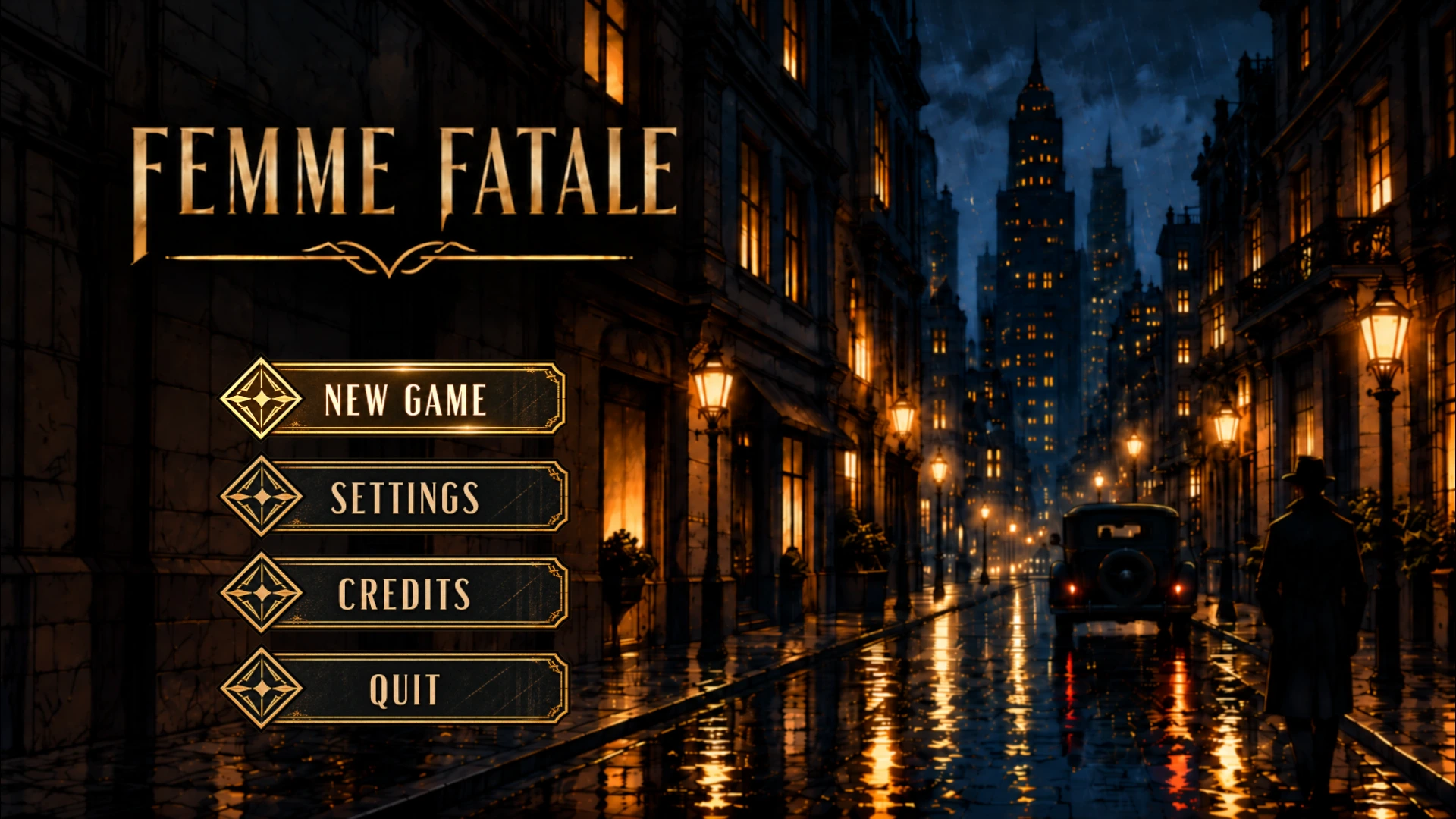
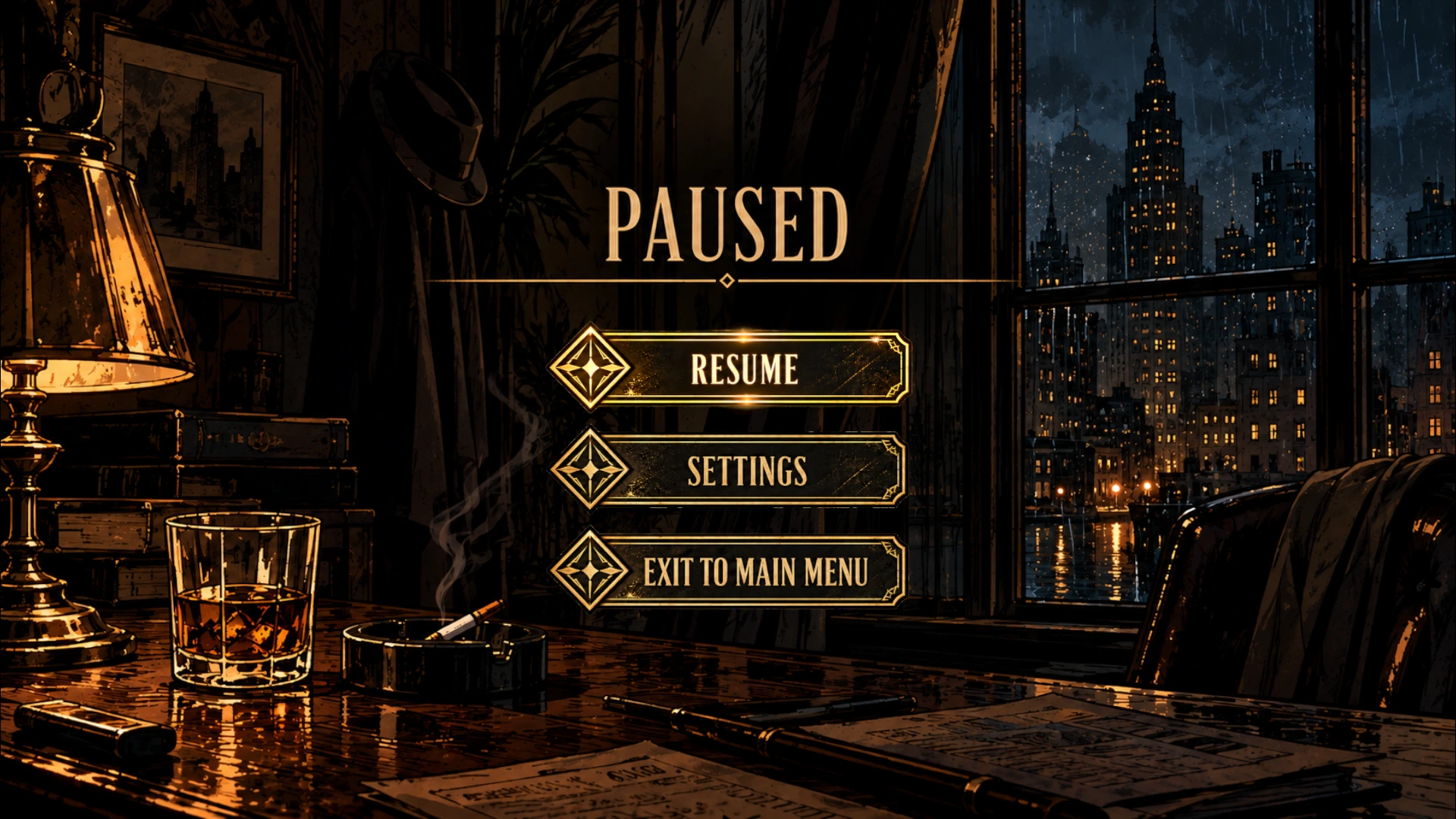
The main and pause menus set decorative gold frames over an illustrated night street.
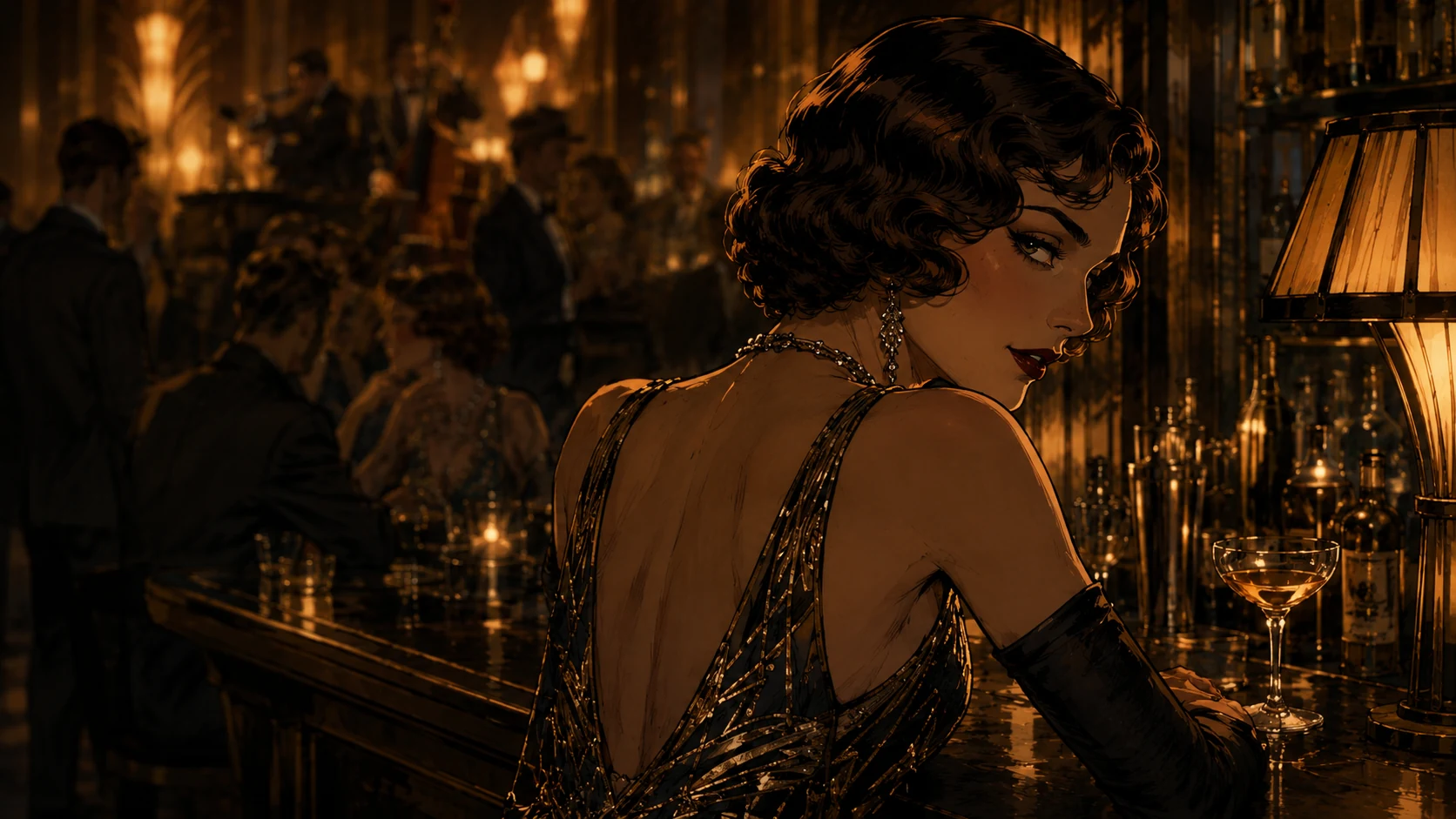
A noir first-person story set in an illustrated Art Deco city.
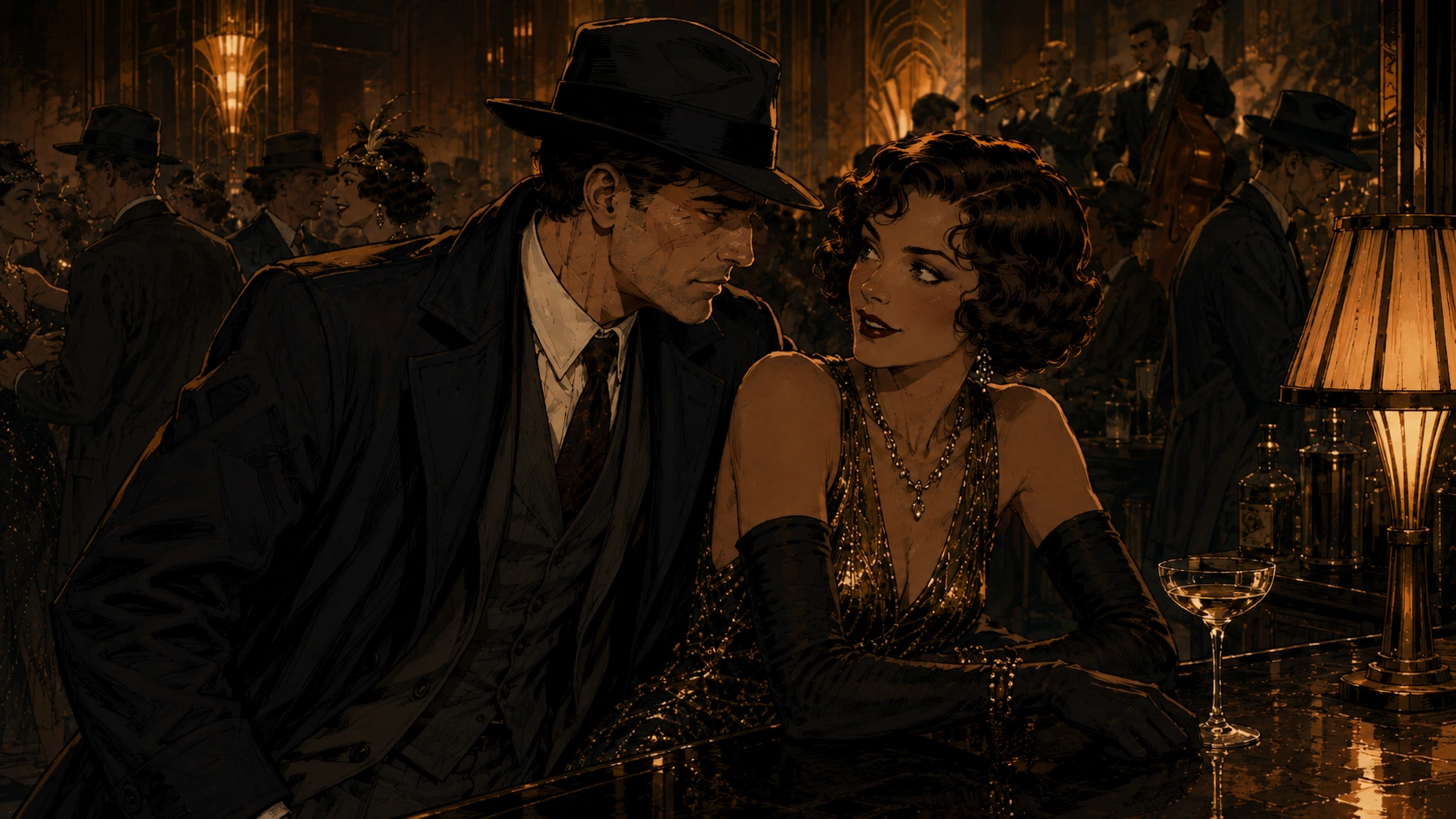
The opening chapter begins with a meeting at The Fitcher and turns into a chase through rain-dark streets, alleys, and courtyards, past guards and fleeing civilians.
Femme Fatale is an indie first-person noir game in development in Unity. It turns graphic-novel artwork into a playable Art Deco city, where illustrated characters move through 3D streets of heavy outlines and painted stone. The first level builds a pursuit into street encounters: close combat with fists, a knife, and a pistol, guards who respond to sight and gunfire, and cover that shapes each approach.
Illustrated story panels set up the opening chapter, from a meeting at The Fitcher to a pursuit into the city.
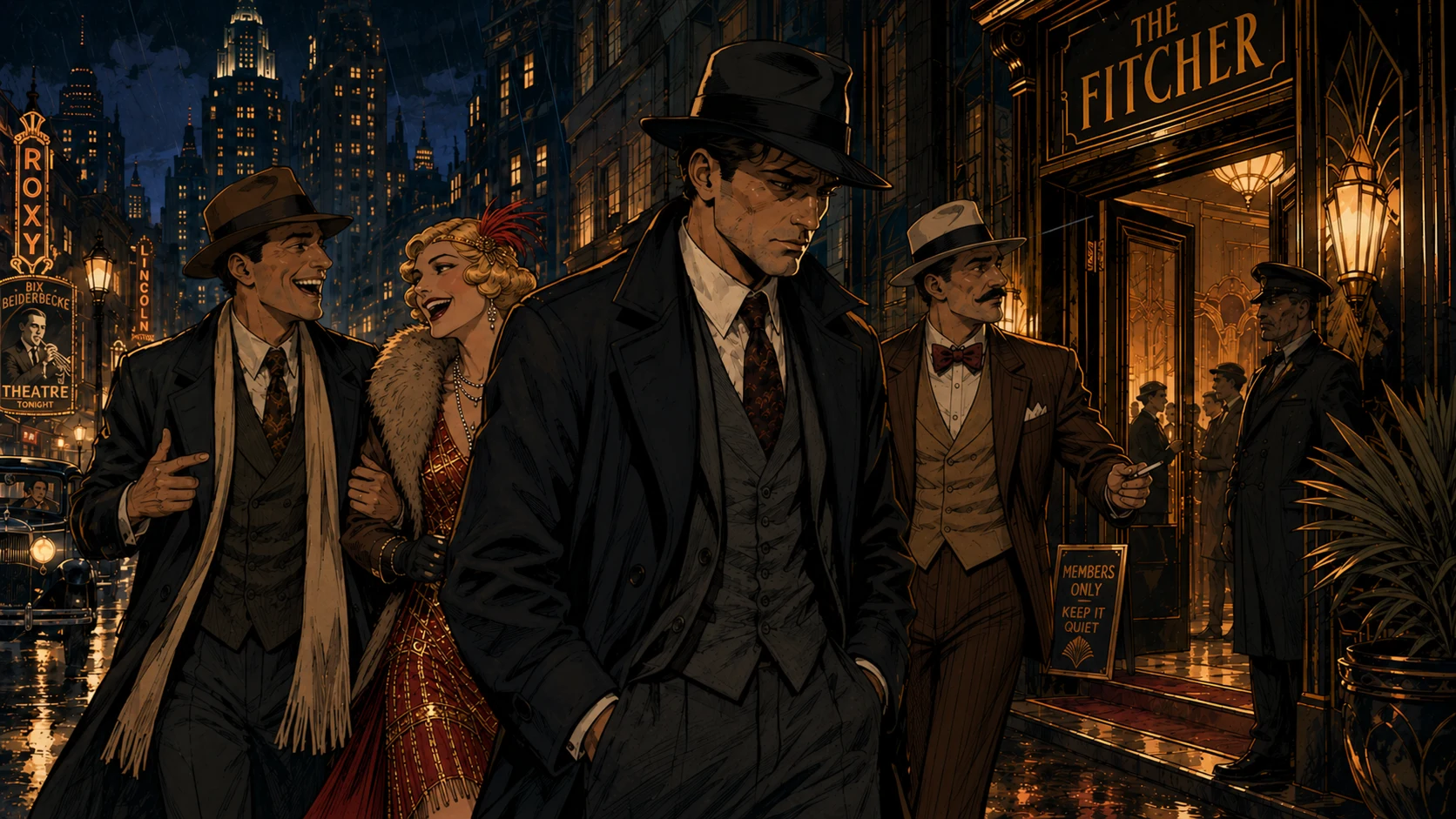
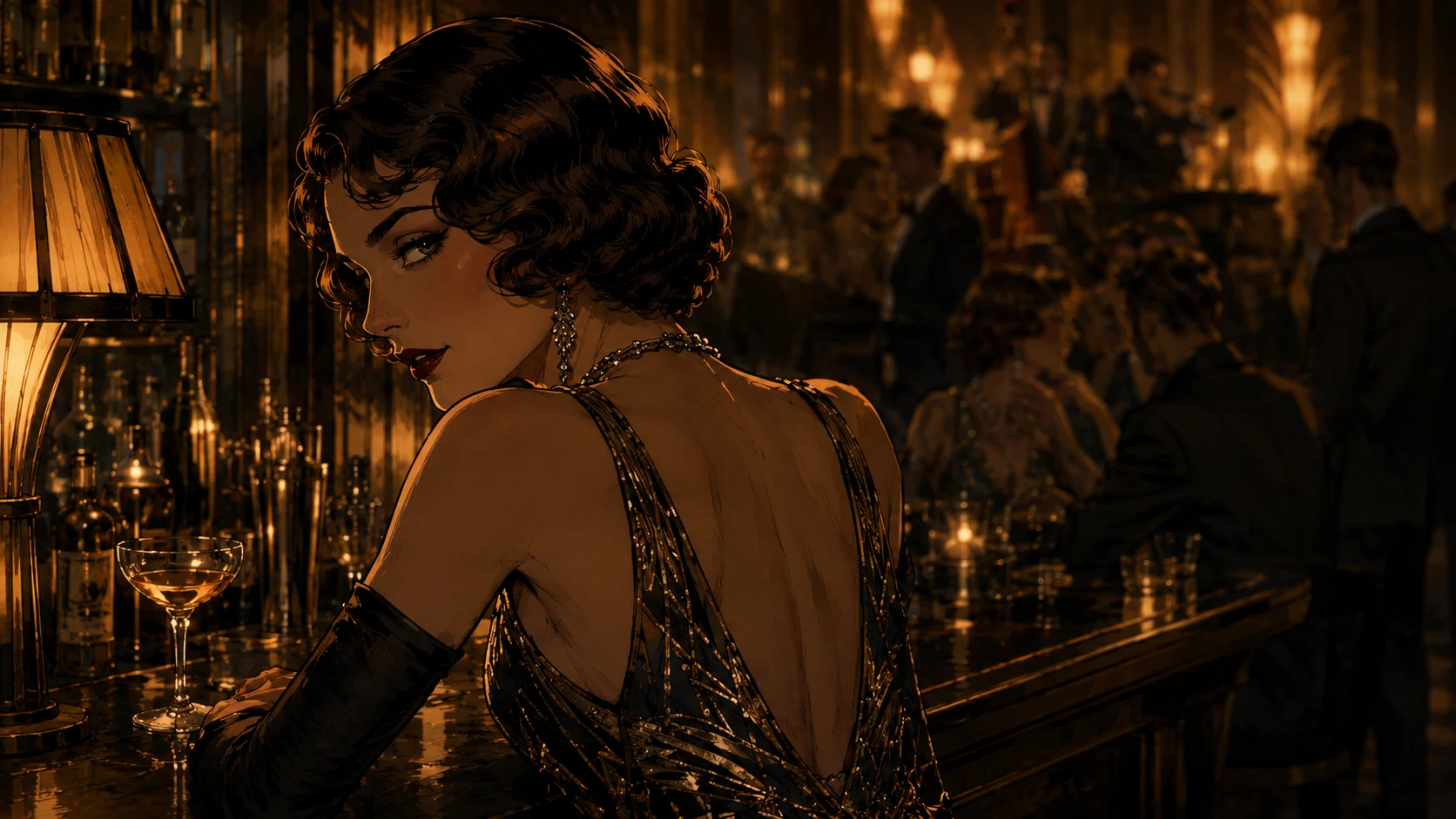
Brass frames, illustrated icons, and paper textures carry the game’s visual language into its menus and HUD.
The main and pause menus set decorative gold frames over an illustrated night street.
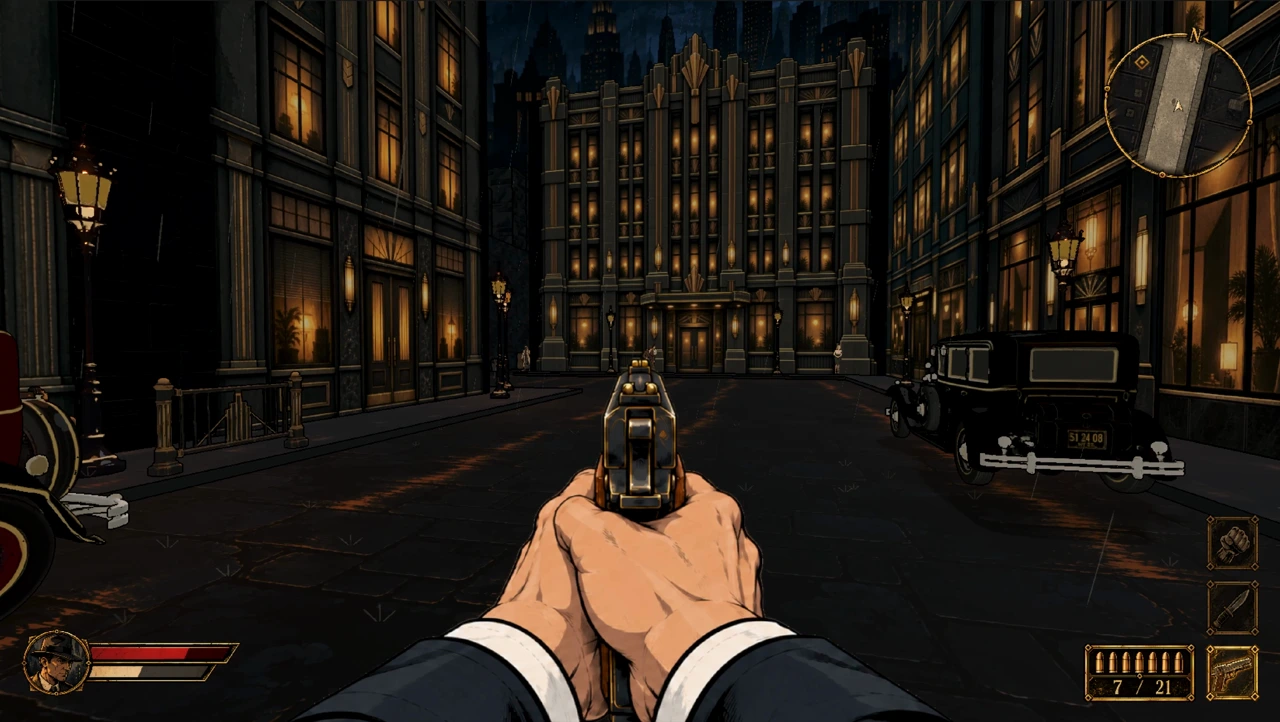
The HUD keeps the objective, position, health, stamina, and weapon state in view, leaving the center clear for aiming and reading the street.
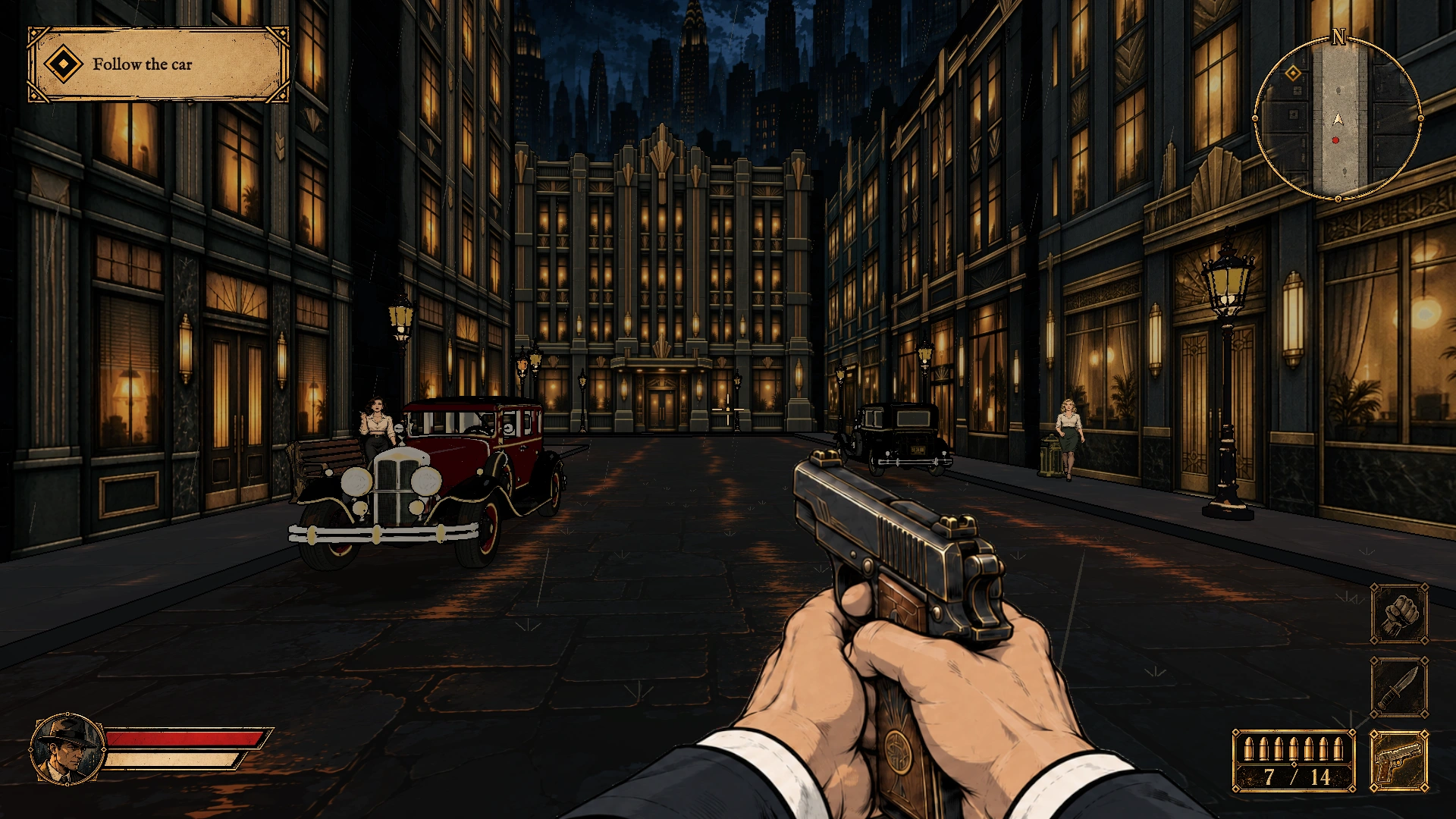
A wireframe gives each corner of the first-person view one job: objective, minimap, health, and weapons. Drag the divider to compare it with the finished HUD in play.
A shared palette, a display typeface, and paired interface sprites connect the story artwork with the game interface, and a pickup animation shows those sprites in motion.
#101B20#40372C#927044#D0AD72#E0D5B9

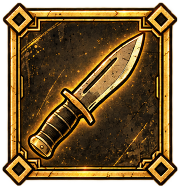
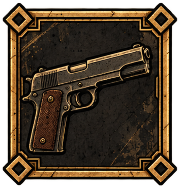
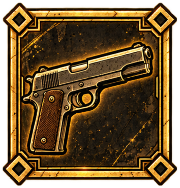


When the pistol is collected, the whole weapon column slides up one row in a single 0.65-second move: the fists and knife rise, and the pistol slot with its ammunition counter rises into the row beneath them while fading in.
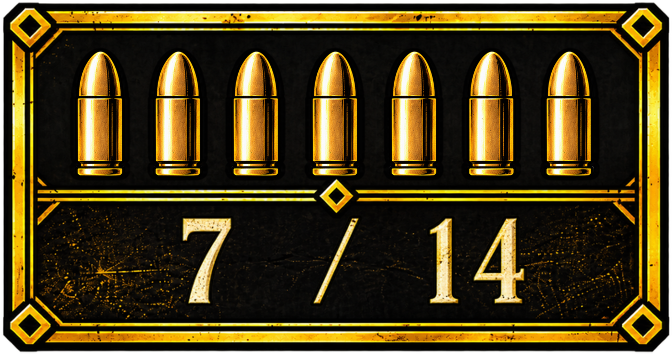
Picking up the pistol equips it and lifts the weapon column one row over 0.65 seconds. The pistol and ammo counter fade in during the first 0.30 seconds, while the fists dim. Both changes start together.
The first level turns a linear pursuit into street encounters, tight cover, and quieter passages.
Three systems shape each street encounter.
Fists, knife, and a lootable pistol have distinct frame-based actions. Hit reactions and comic impact marks connect each attack to the world.
Guards respond to sight, nearby combat, and gunfire. Civilians react to danger, flee, and recover as encounters unfold.
Finite ammunition, stamina, and cover shape the pursuit. Dialogue follows encounter progress, leading into a framed closing shot.
Each weapon has its own illustrated animation as the player switches between fists, knife, and pistol.
Cover placement keeps a route open and gives crouching a purpose.
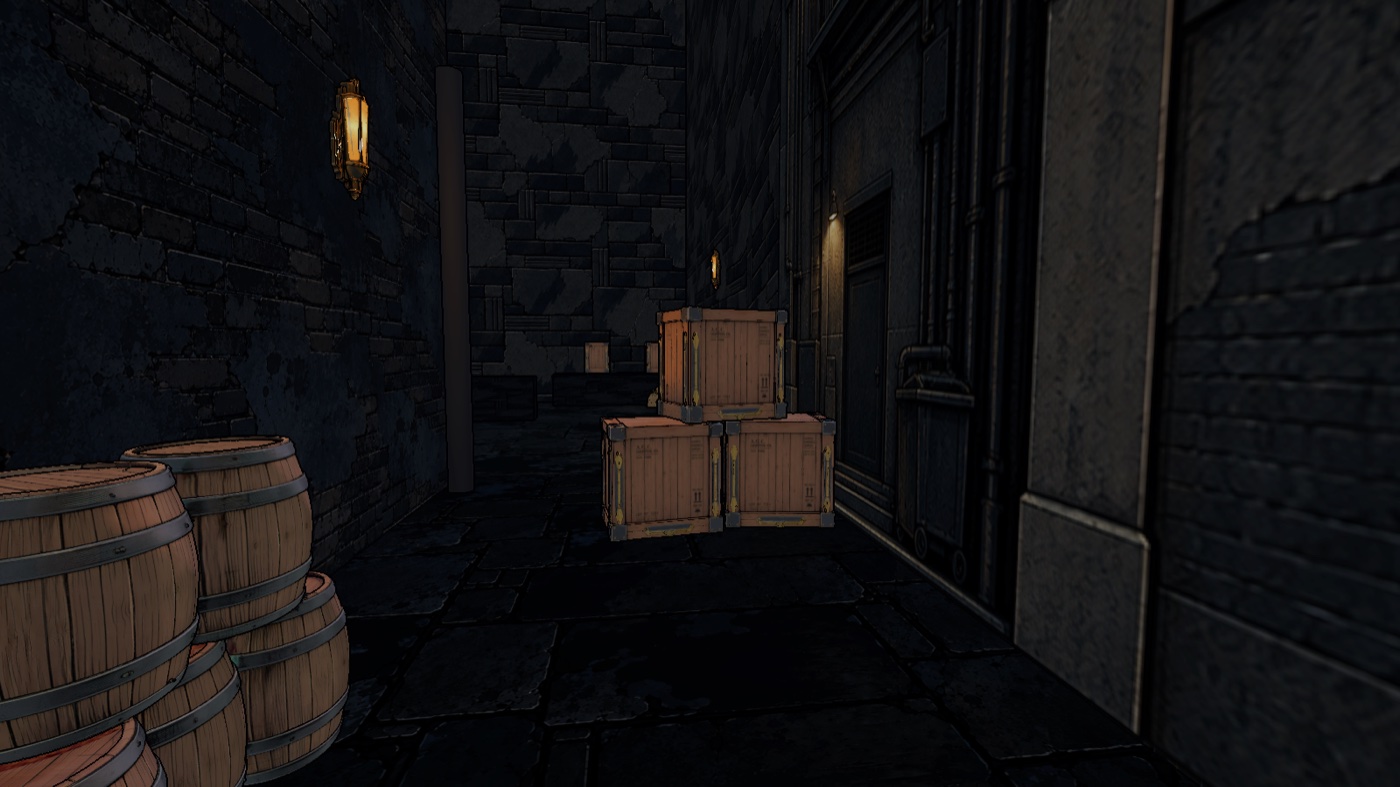
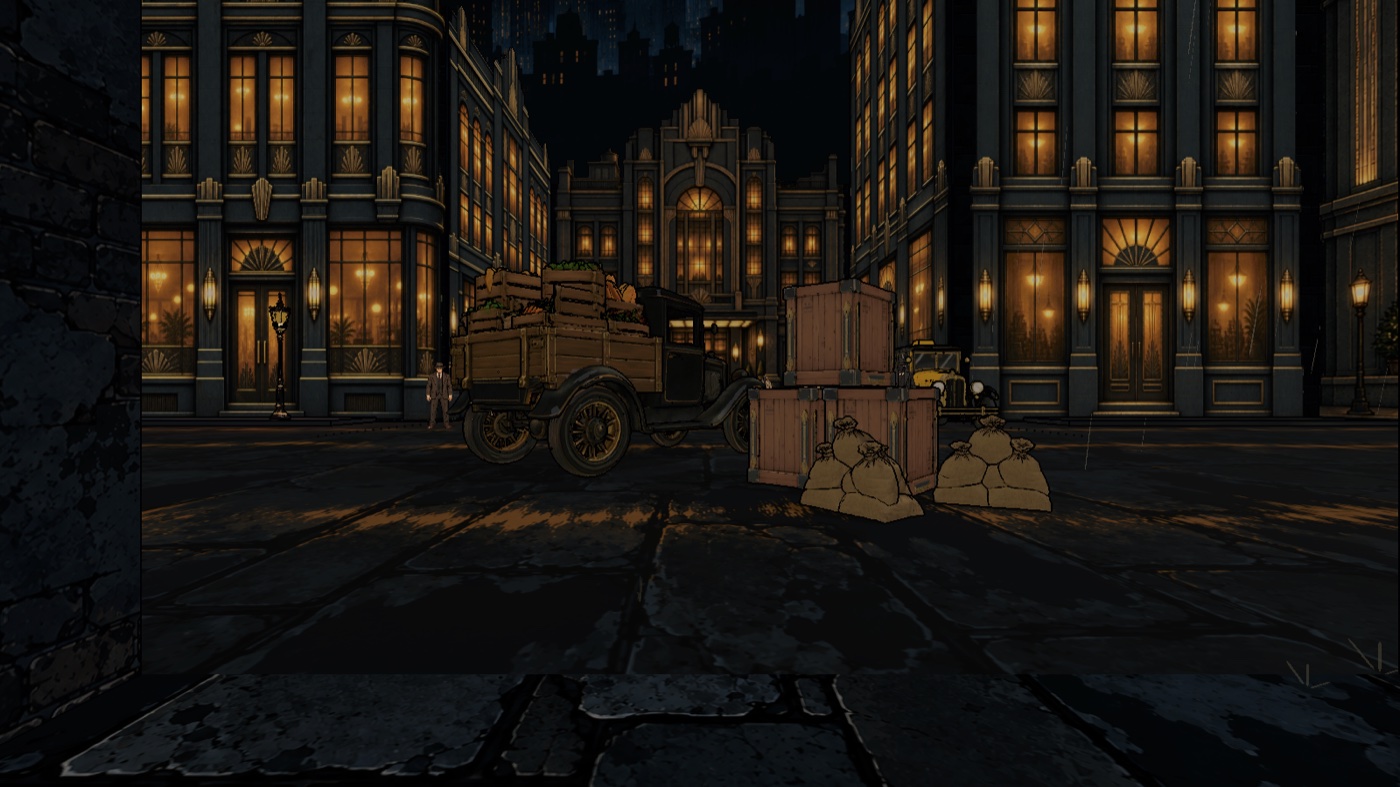
Heavy outlines, painted surfaces, warm brass, and rain-darkened stone carry the story artwork into the level.
Warm bulbs draw attention to the threshold, giving the opening street a recognizable landmark. The prototype lifts ground and facade shadows so the route stays readable without losing the noir mood.
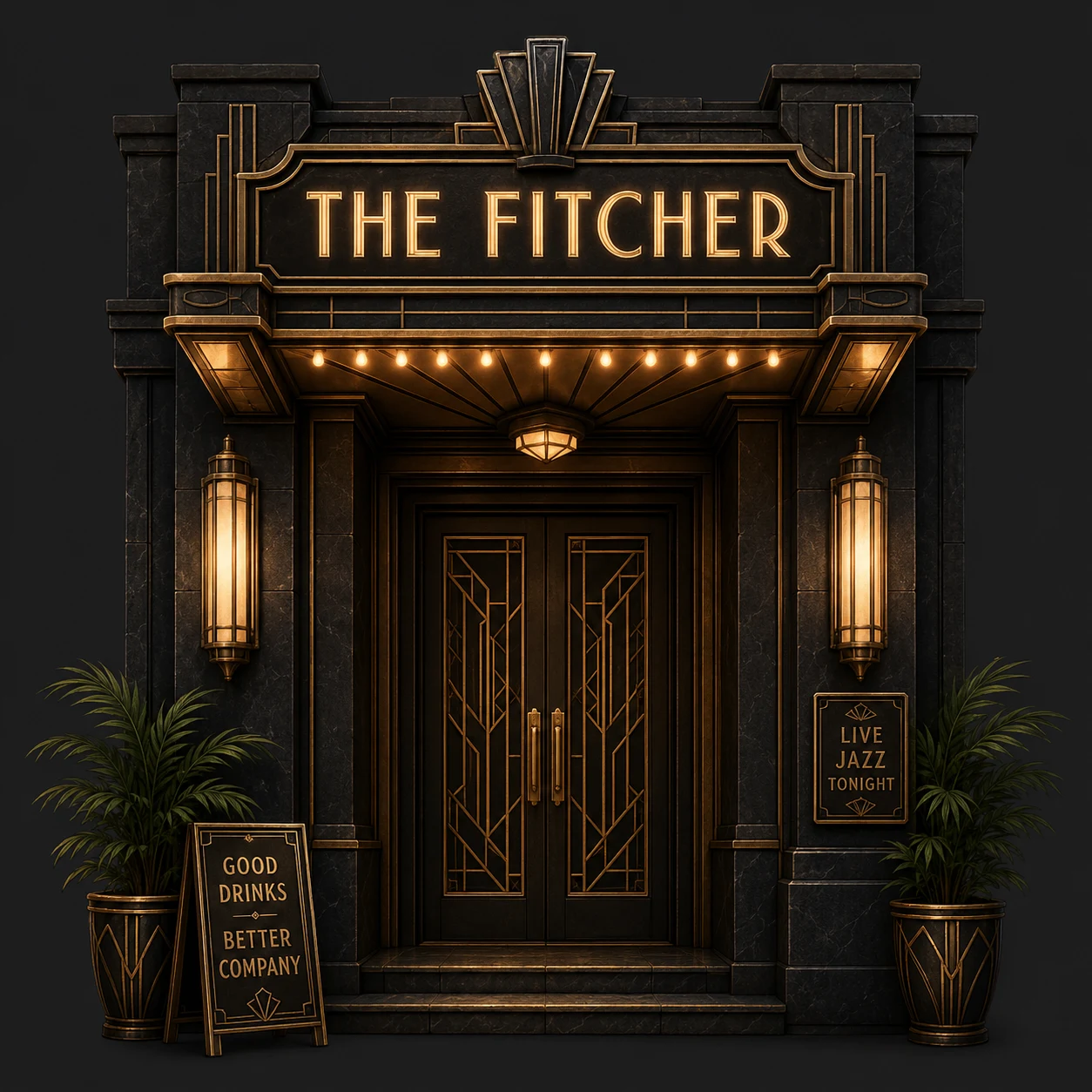
Painted facades establish the building’s identity, while the dimensional entrance gives it depth.
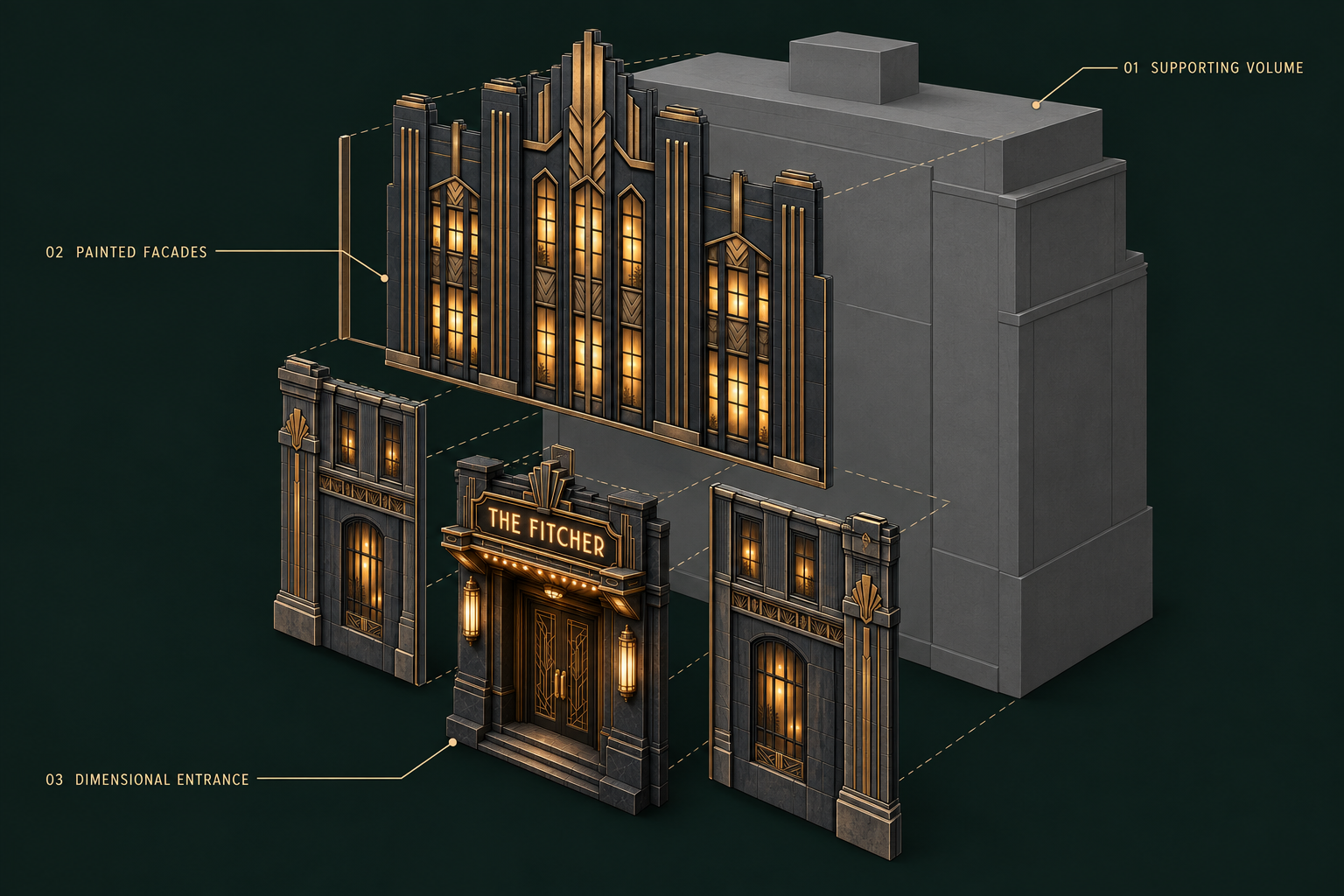
Painted materials give the street its character, while a neutral override exposes the building volumes beneath them.
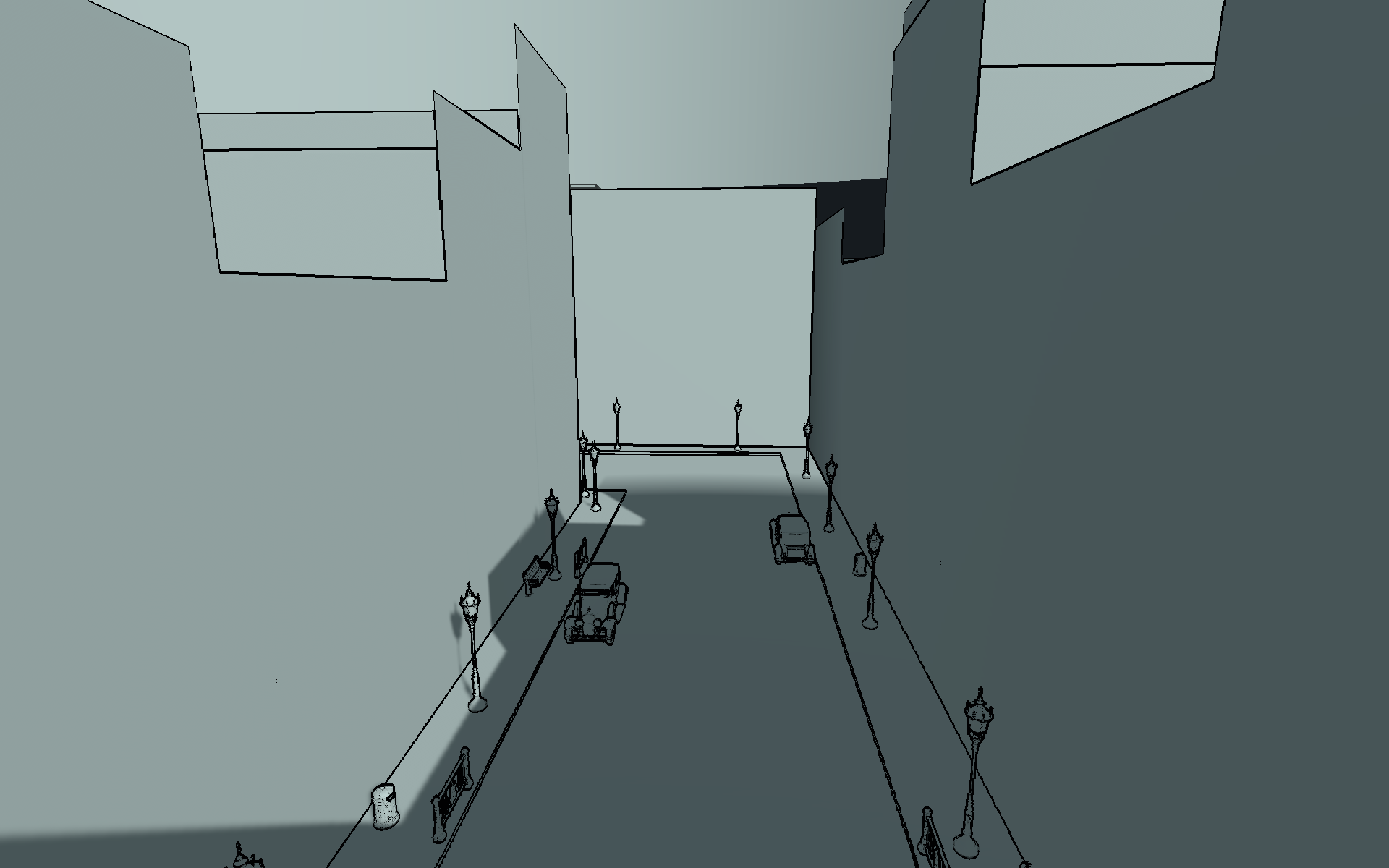
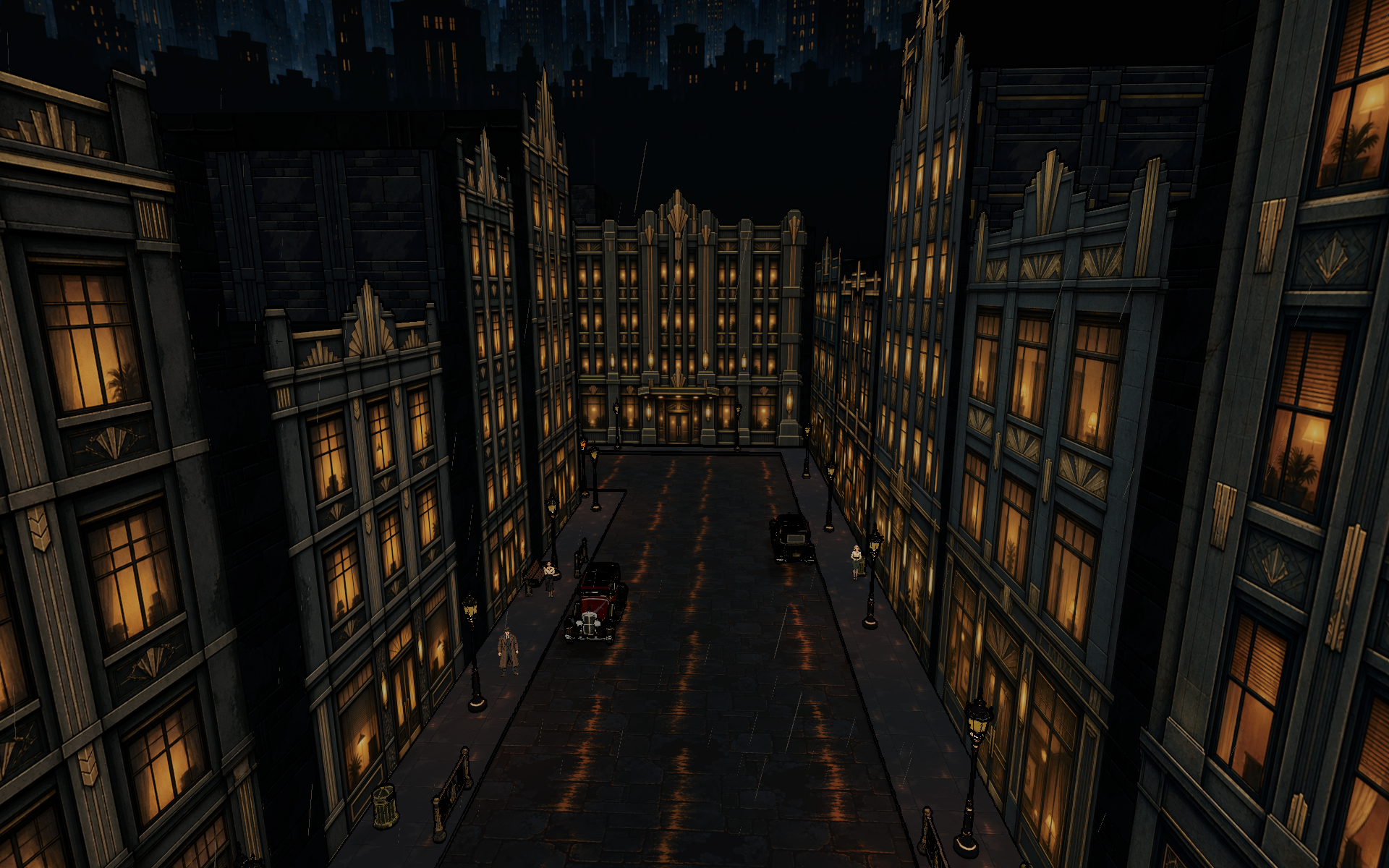
Unity scene captureThe neutral view is a material override of the current scene.
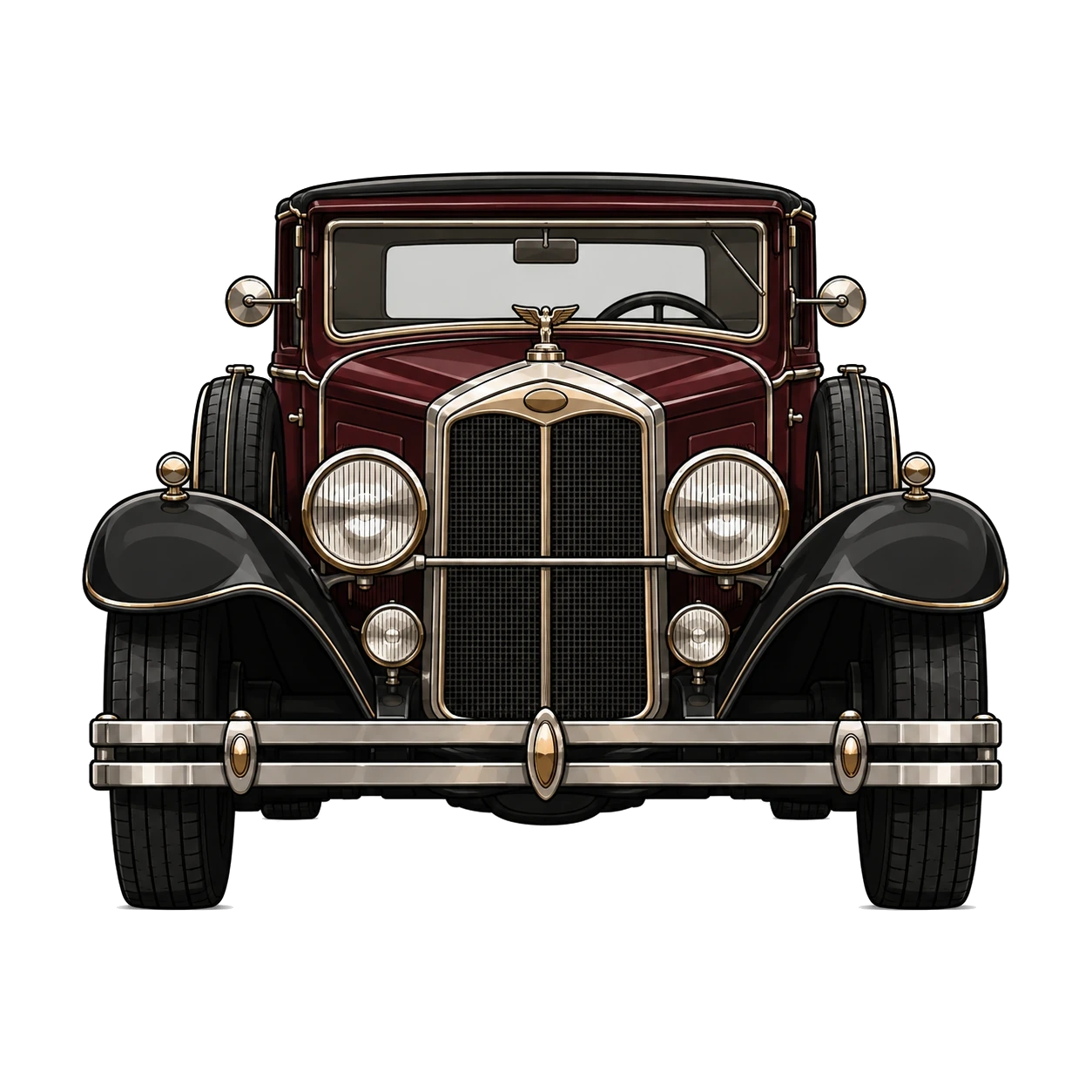
Long fenders, deep burgundy paint, and brass details carry the city’s Art Deco language into its vehicles.
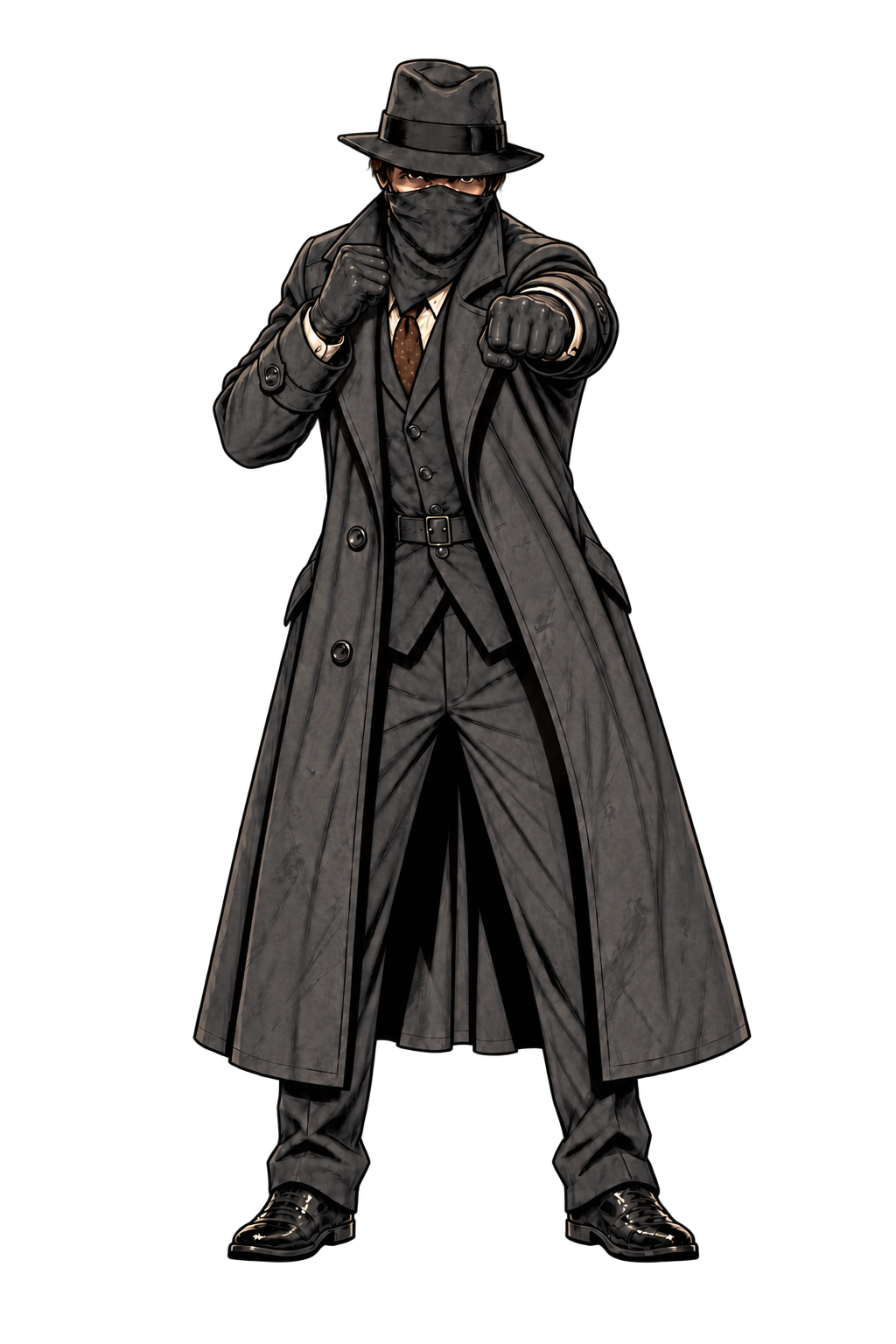
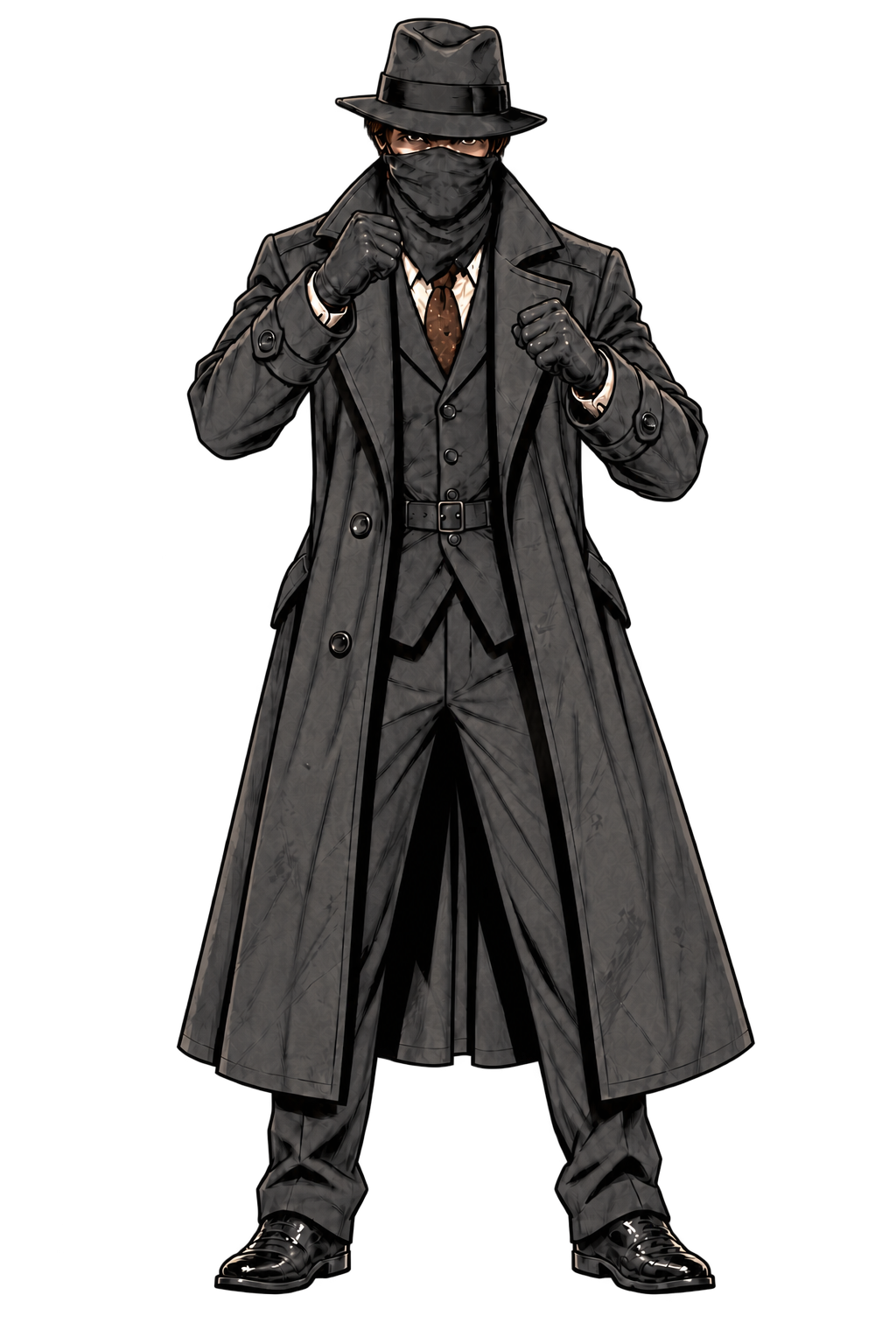
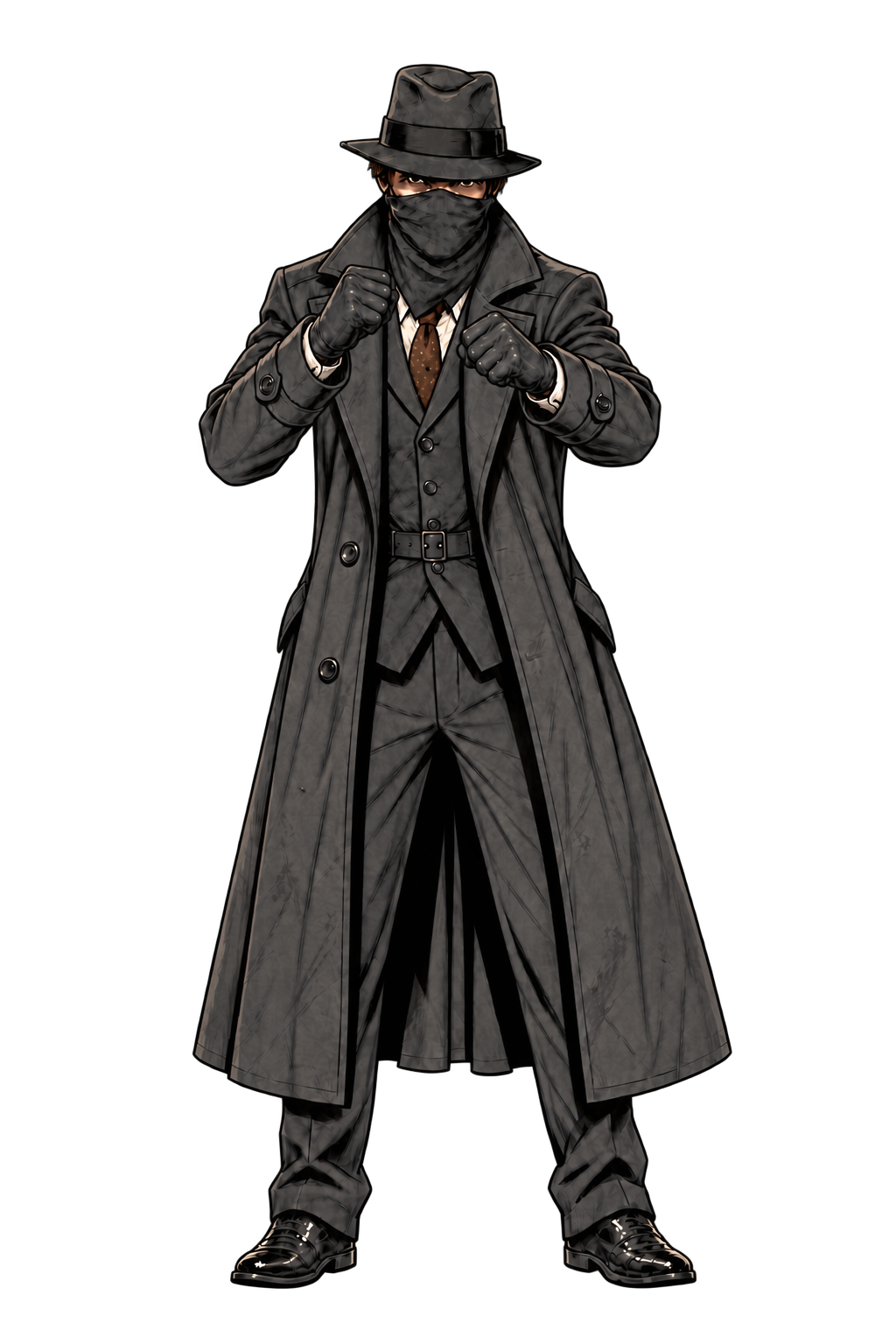
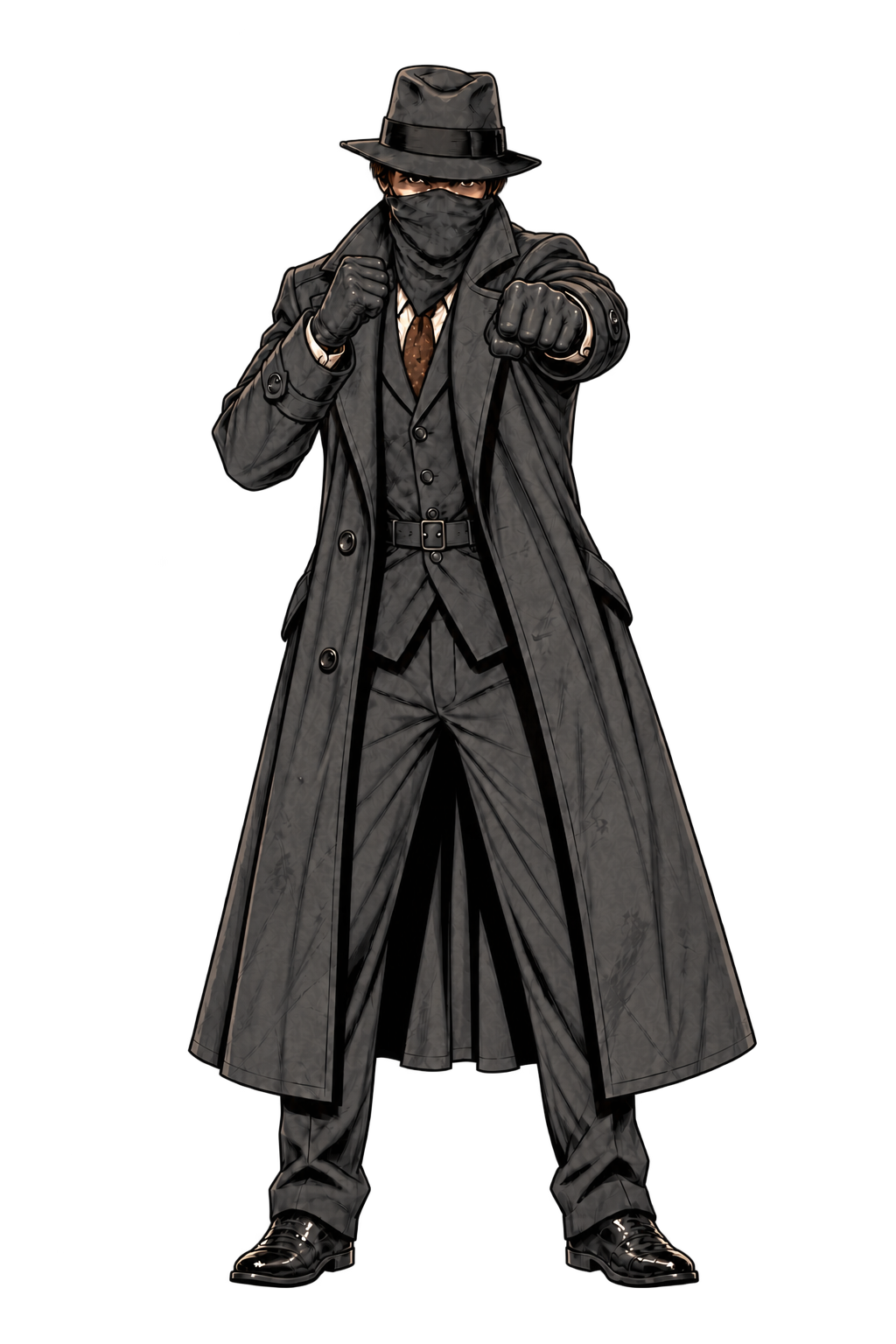
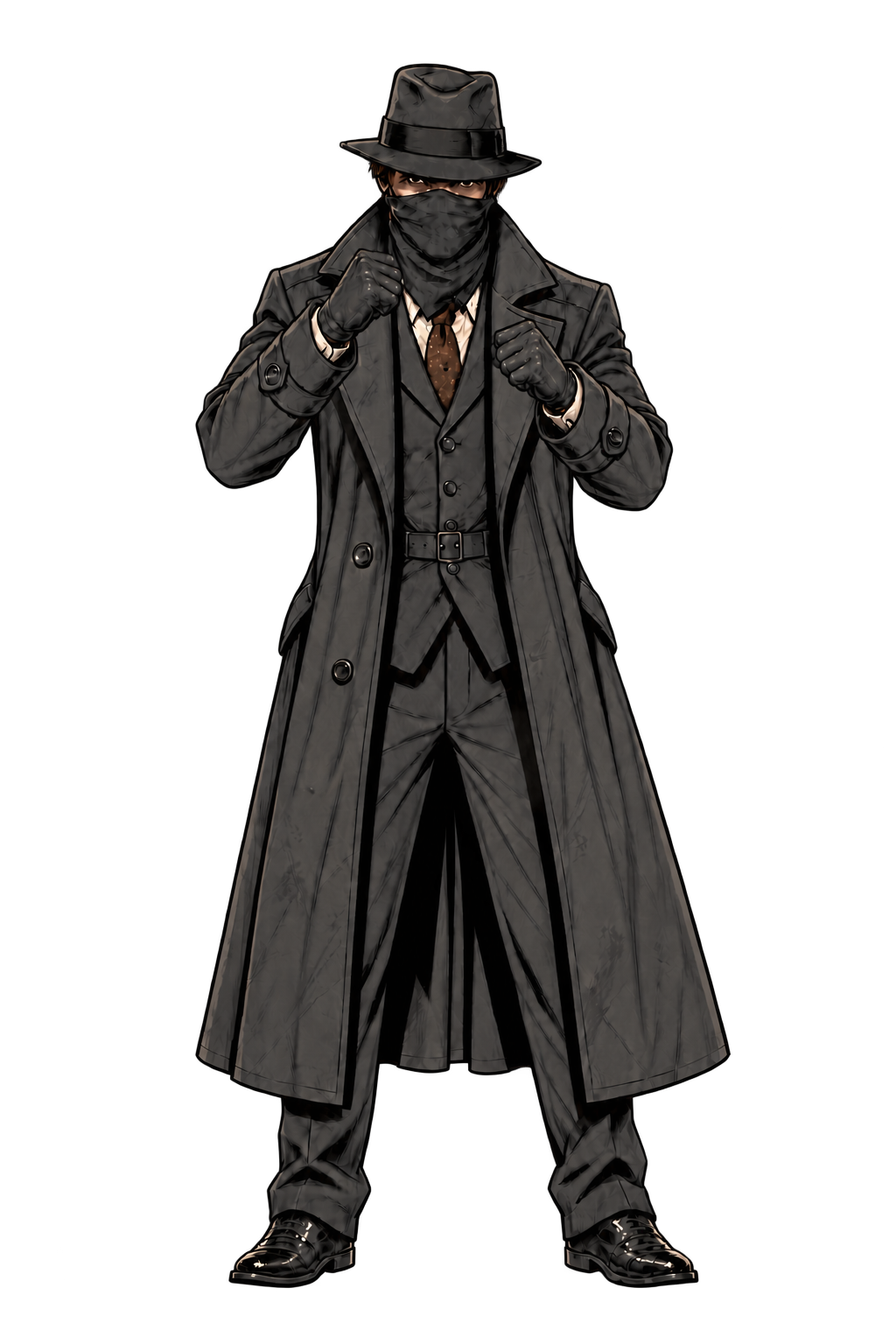
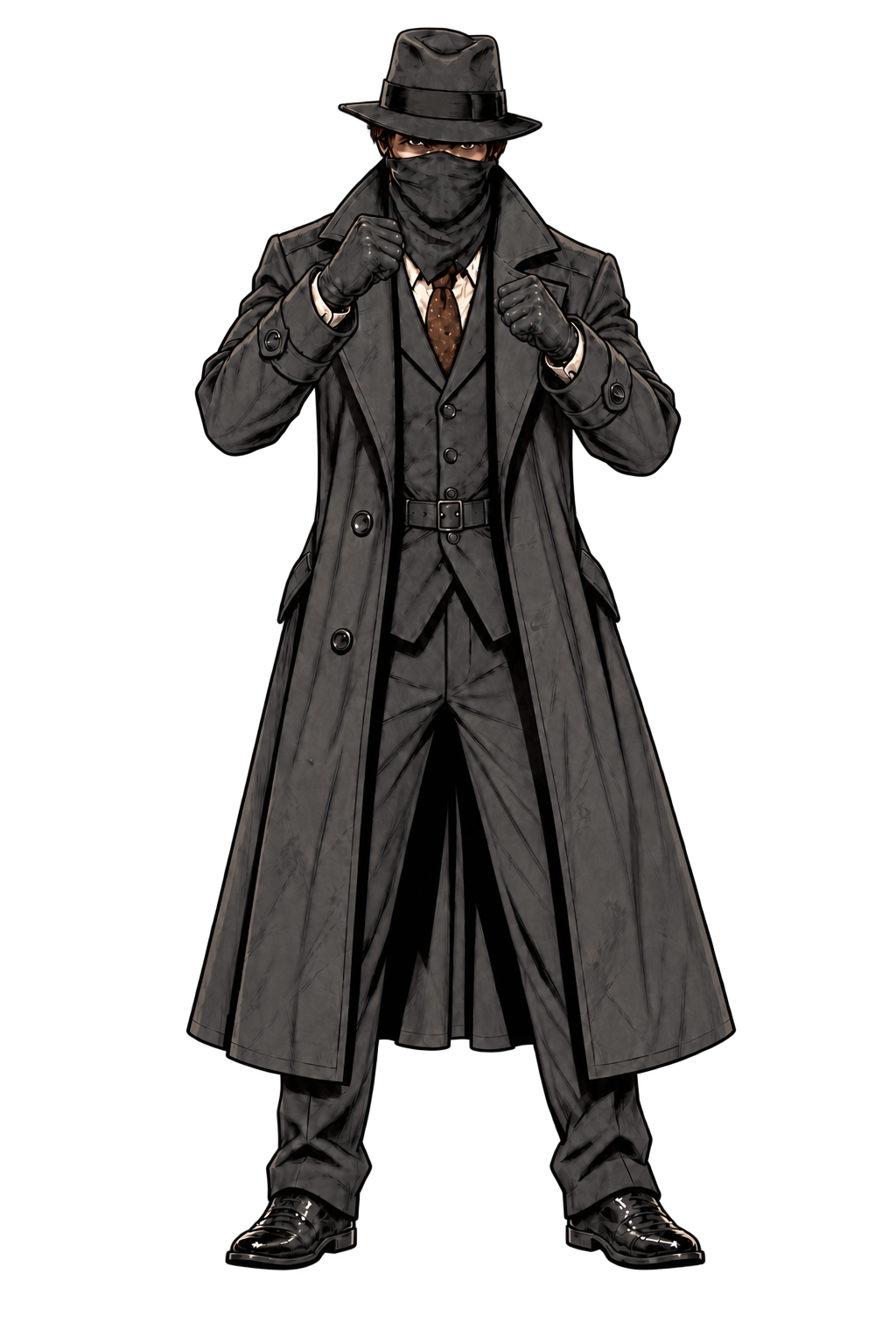
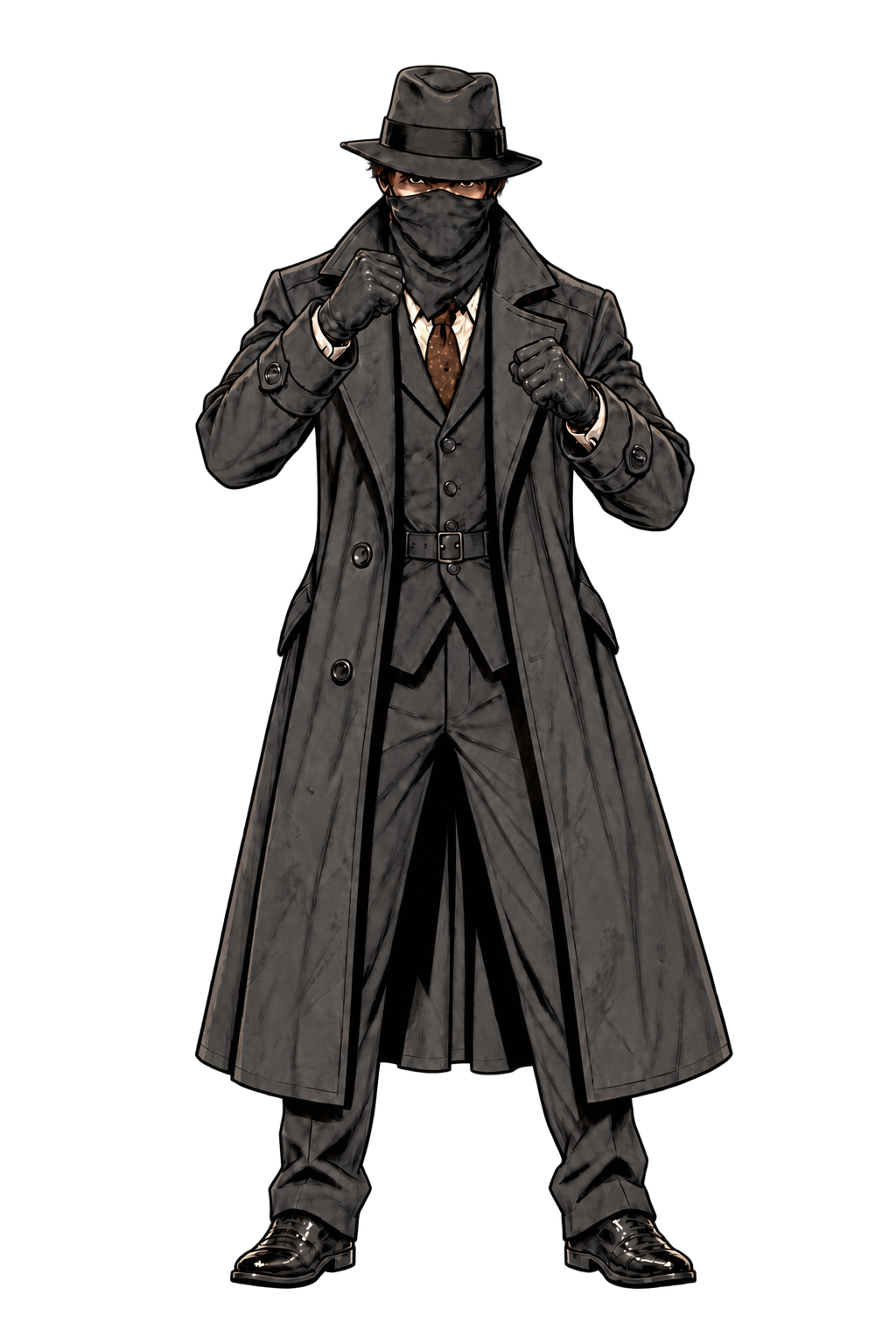
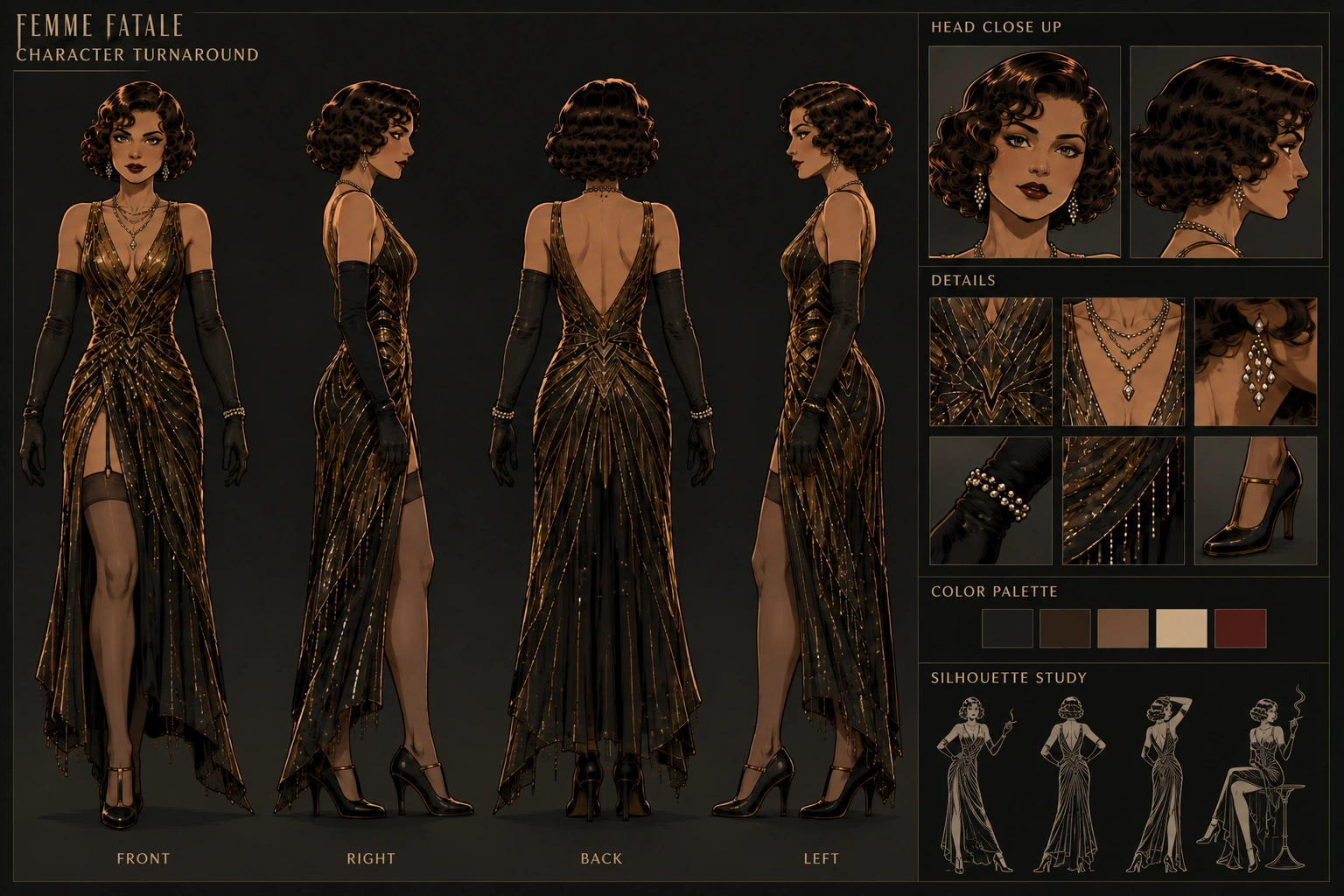
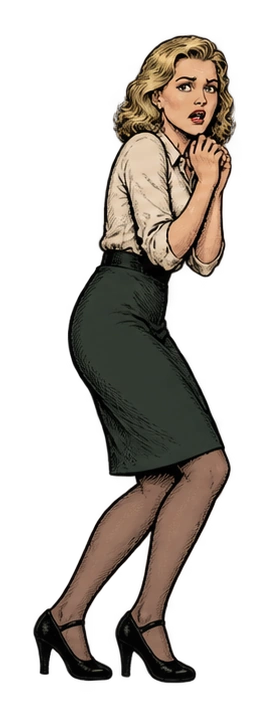
Illustrated sprites give the femme fatale, enemies, and civilians distinct silhouettes inside the 3D streets.
The femme fatale holds her silhouette from every angle, with costume and jewelry details and a color palette of her own.
Frame-based enemy animation brings patrols, attacks, and reactions into the streets. Civilians add everyday life to the city and respond when danger arrives.
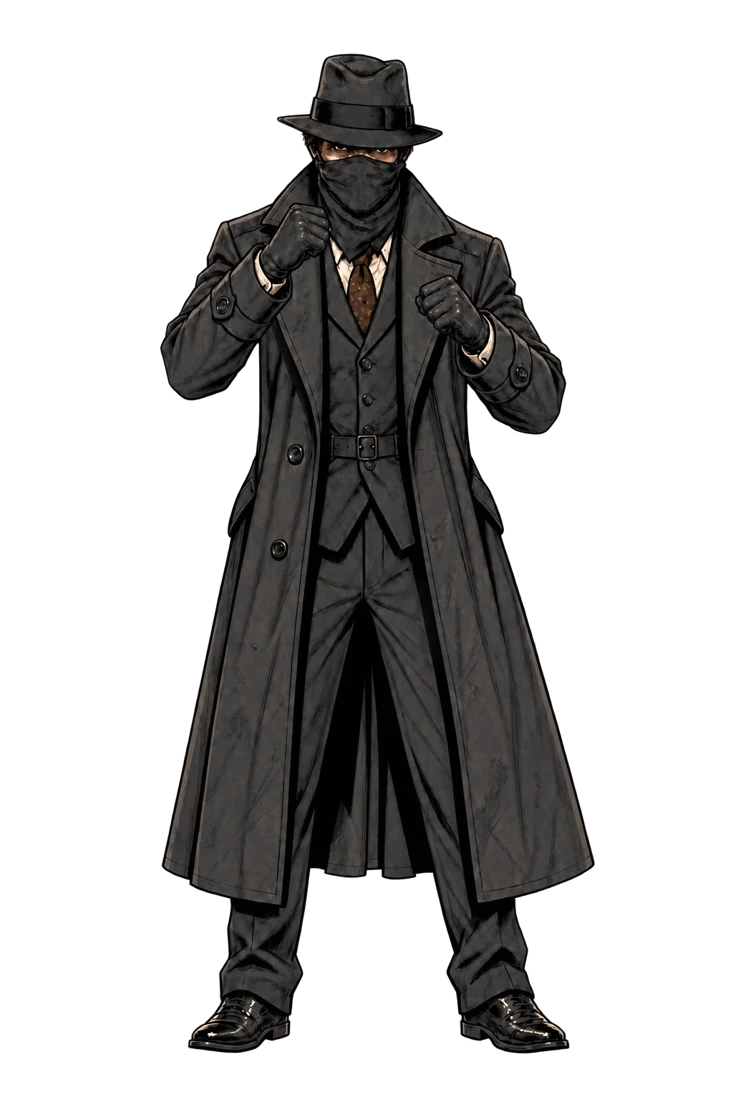
Seven source drawings make one jab: a three-drawing windup, contact at 0.18 seconds, and recovery by 0.47 seconds.