Solo Game Designer & Developer
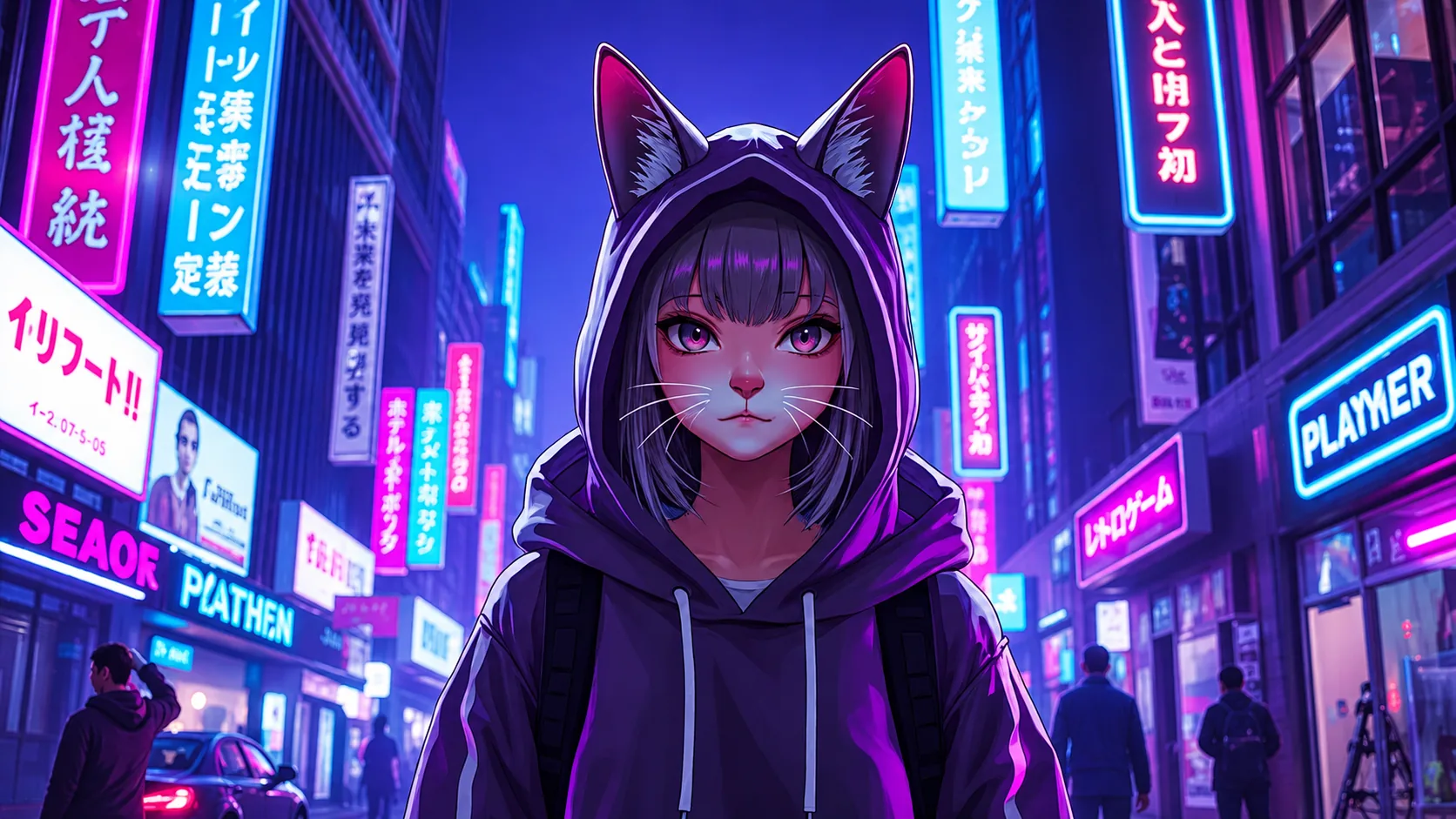
An original 2.5D action-adventure game built in Unreal Engine 5. I created its narrative, gameplay, character, UI, animation, and world design.
Feral is an original 2.5D action-adventure game that I am developing independently in Unreal Engine 5. Inspired by my cat Maya, I created its narrative, main character, gameplay systems, environments, UI, animation, and visual direction. The project explores a dystopian city through Maya’s perspective and remains in active development.
I designed and developed the gameplay, player movement, combat, puzzles, enemy AI, level design, narrative systems, and complete interface. I also created Maya, the main character, through concept design, modelling, texturing, rigging, and animation.
For the environments, I combined selected third-party assets with my own composition, lighting, materials, effects, and level design to create a cohesive dystopian world. Feral is still in development and brings together storytelling, art direction, gameplay systems, UX/UI, and technical implementation.
- Role
- Solo Game Designer & Developer
- Tools
- Unreal Engine 5 · Blender · Adobe
- Scope
- Narrative · Gameplay · Art · UX/UI
- Status
- In Development · 2024–Present
Narrative
Feral takes place in Lyseris, a futuristic city placed under strict control after experiments involving human and feline genetics destabilized society. Maya, a young humanoid feline, leaves the safety of her apartment and begins uncovering the circumstances behind her transformation and the city’s collapse.
Maya’s route through the city
The story follows her through restricted streets, rooftops, abandoned spaces, and guarded facilities. As she avoids robotic authorities, encounters hostile altered creatures, and solves environmental obstacles, she gradually discovers how her family and the city’s past are connected.
Writing the story and world
I developed the narrative, characters, setting, and major story events alongside the gameplay and level design. The case study intentionally avoids revealing the conclusion or major late-game discoveries.
Character Art
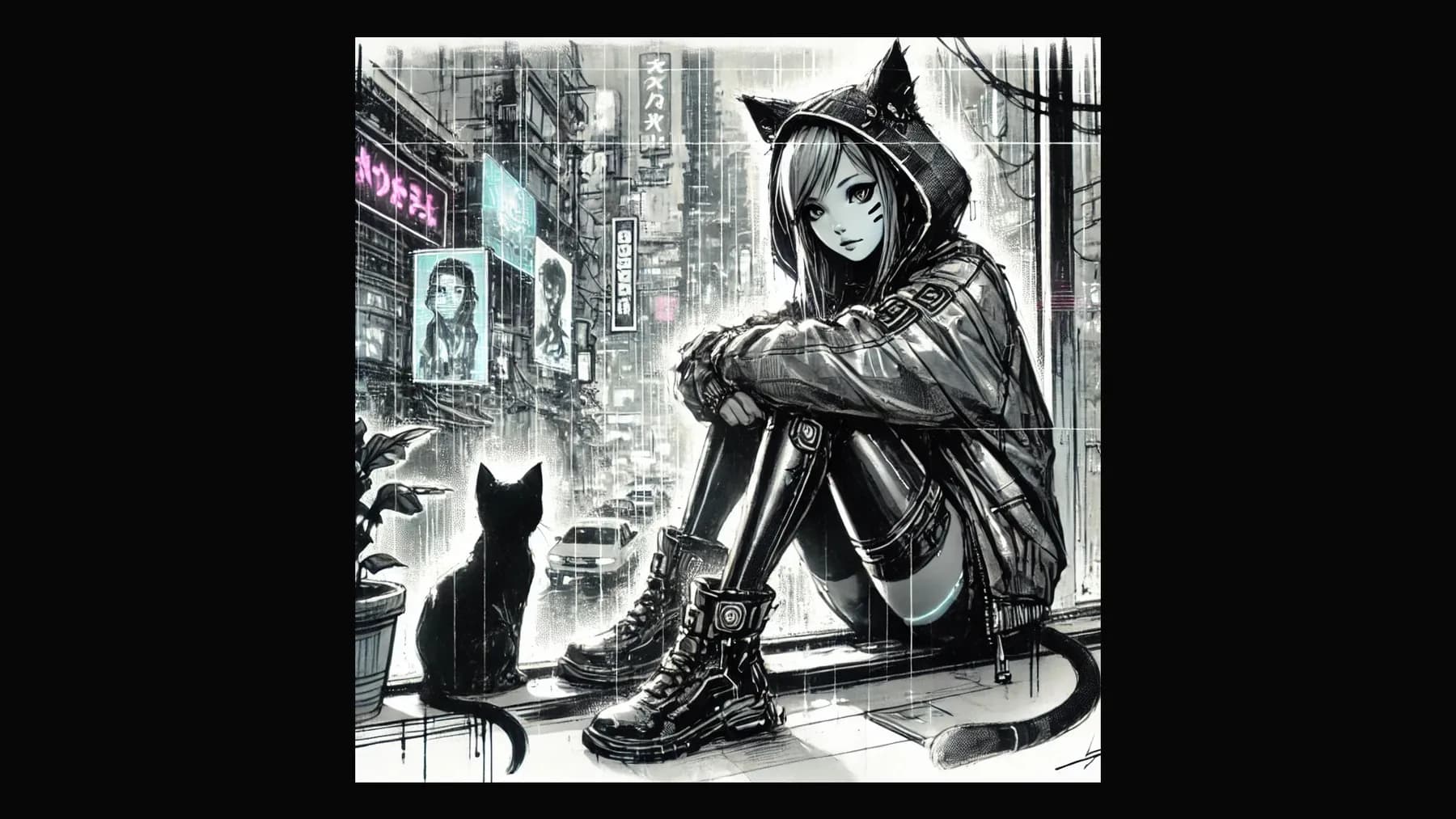
A believable creature is the hardest thing to fake. Maya had to read as feline in silhouette, in weight, and in the smallest idle twitch — long before she ever moved.
Developing Maya from concept to model
I designed Maya as a humanoid feline whose appearance needed to communicate both vulnerability and physical capability. I developed her from early sketches into a complete 3D character, refining her silhouette, facial structure, clothing, and proportions through low-poly modelling and higher-resolution sculpting in Blender.
Defining materials and surface detail
I created the character’s textures and materials to distinguish skin, fur, clothing, and accessories while maintaining a cohesive stylized look. Surface detail was kept readable at the side-view gameplay distance but developed with enough resolution for closer narrative and portfolio shots.
Preparing Maya for gameplay animation
I rigged Maya and prepared the model for locomotion, combat, traversal, and narrative animation. The character setup supports the movement required by the game, including running, jumping, climbing, attacking, reacting to damage, and transitioning between gameplay states.
Environment Art
Establishing the world of Lyseris
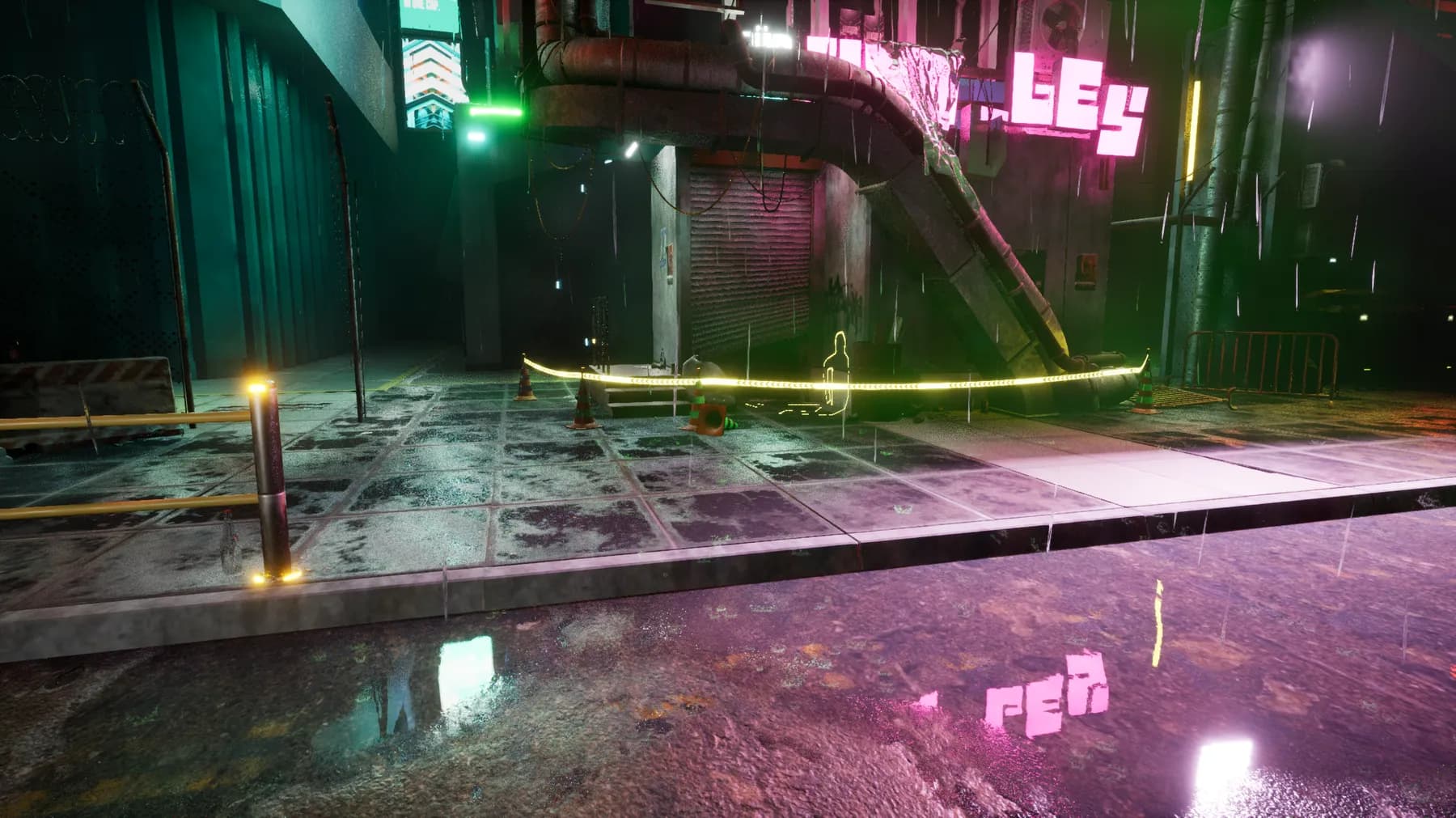
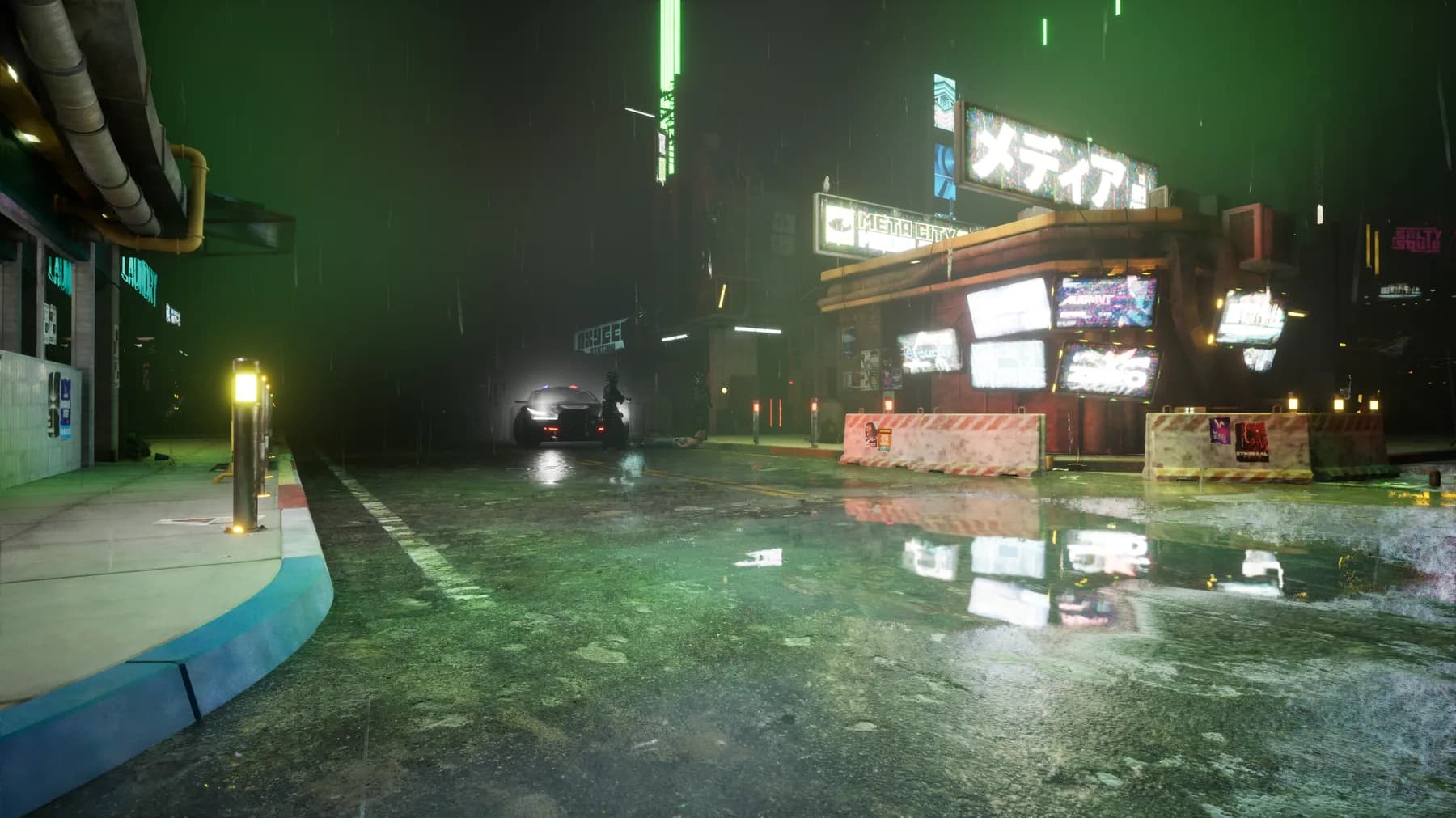
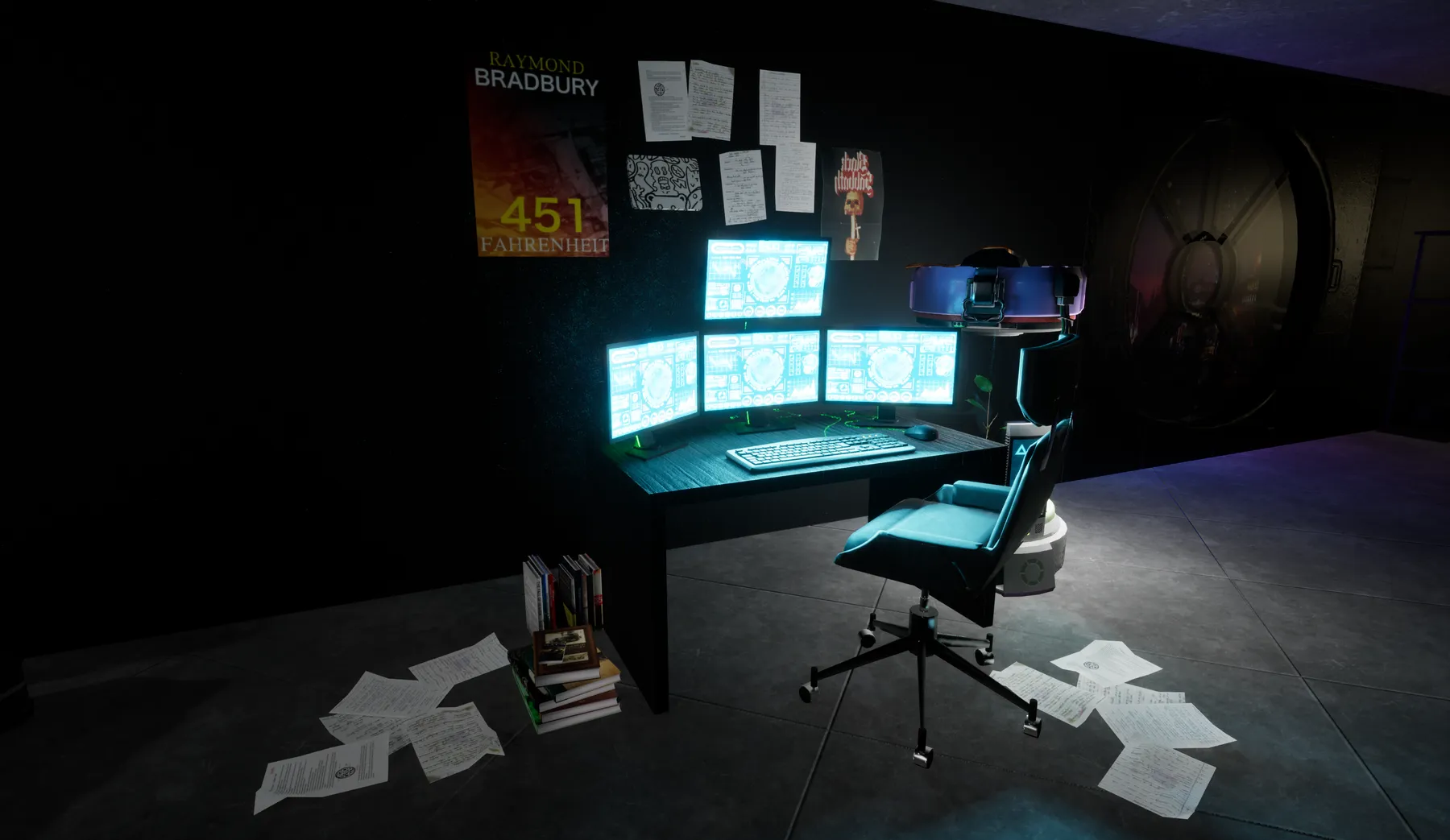
I designed Lyseris as a dense futuristic city viewed largely at night, using controlled neon lighting, industrial structures, rain, and elevated pathways to support the story’s tension. The visual direction combines urban familiarity with exaggerated scale to reflect how Maya experiences the city.
Designing environments around gameplay
I began each area with blockouts and gameplay tests before refining navigation, platforming routes, combat spaces, hiding areas, and environmental puzzles. I used selected third-party environment assets, then created the level composition, lighting, materials, effects, and gameplay flow around them.
Using lighting to guide the player
Lighting supports both atmosphere and navigation throughout the levels. I used contrast, colour, fog, reflections, emissive signs, and focused light sources to separate routes, identify interactive areas, establish danger, and connect environmental changes to the story.
Game Development
A world only comes alive when it reacts. Two systems carry most of that weight: how Maya moves, and how the things in the dark respond to her.
Connecting animation to movement
I connected character animation to gameplay variables such as movement speed, direction, attacks, and state changes. Maya’s animation system supports transitions between locomotion and combat while preserving the physical qualities established through her character design.
Distinct melee and ranged behaviours
I developed separate behaviour systems for melee and ranged enemies, including patrol routes, visual and audio detection, pursuit, attack states, and repositioning. The ranged enemy uses Unreal Engine 5’s Environment Query System to evaluate nearby locations and select more appropriate positions during combat.
User Interface
Connecting the interface to gameplay
I designed and implemented Feral’s menus, HUD, combat feedback, dialogue, prompts, and supporting screens in Unreal Engine 5. The interface communicates player state and available actions while using typography, motion, colour, and framing that match the game’s visual direction.
Menus and screens outside gameplay
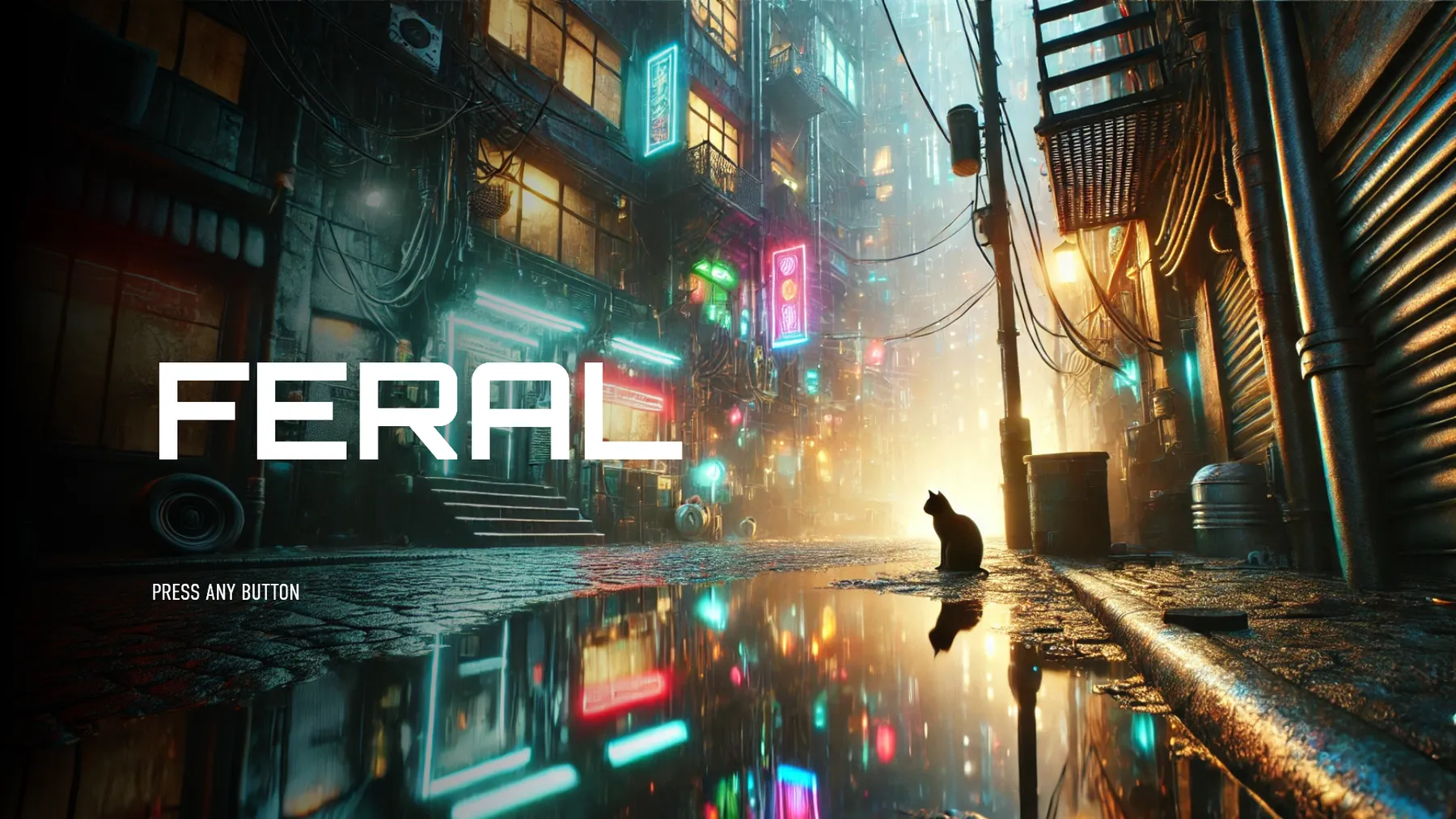
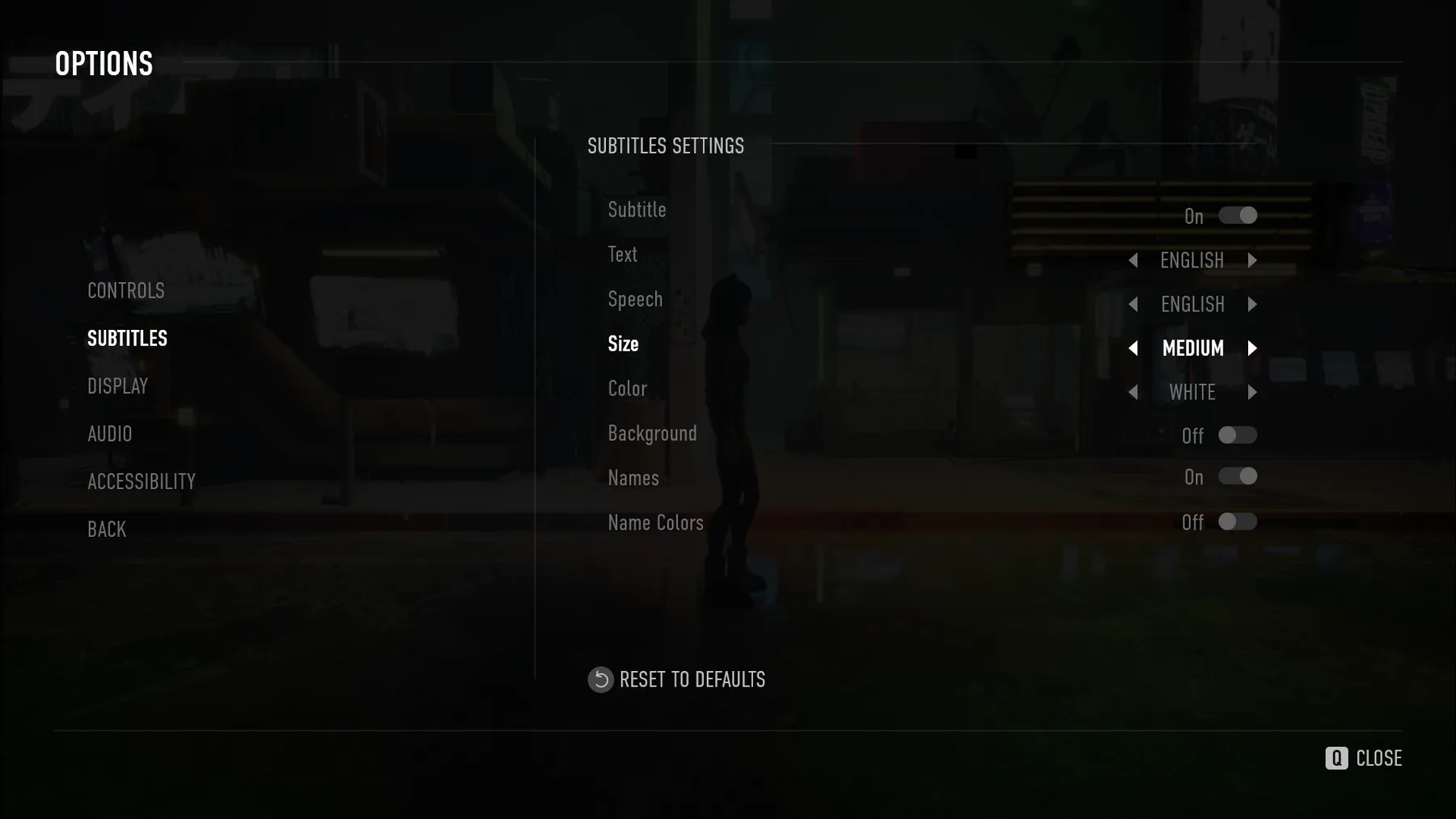
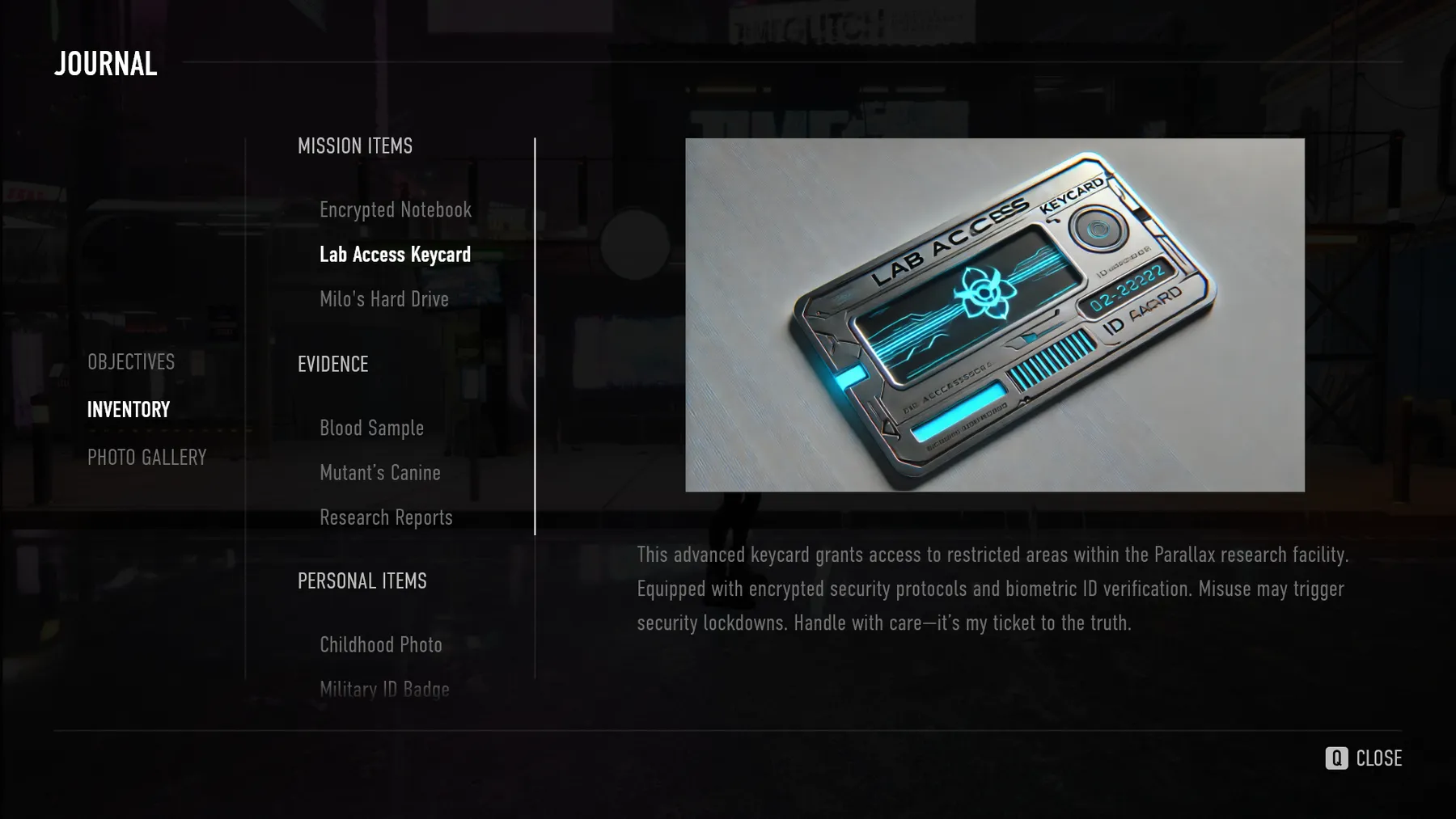
Away from gameplay — title, journal, options — the interface carries the same neon-noir type and motion language as the world, so the title screen, settings, and journal read as parts of one authored product rather than separate utilities.
What I learned
Building a game requires connected systems
Working independently showed me how strongly narrative, gameplay, level design, animation, art, and UI depend on one another. A change to movement or combat can affect animation, interface feedback, enemy behaviour, and environment layout, so decisions must be evaluated across the complete player experience.
Scope must support the core experience
Feral taught me to evaluate features by how directly they support the game’s central experience. Developing every discipline alone requires prioritizing systems that strengthen movement, combat, exploration, and storytelling while postponing ideas that add production time without improving the player’s understanding or engagement.
Iteration reveals technical and design problems
Testing the game in Unreal Engine 5 often exposed issues that were not visible in sketches or isolated prototypes. Repeatedly playing each section helped me refine timing, navigation, enemy behaviour, animation transitions, visual guidance, and interface feedback as connected parts of the same experience.
GExplore